
A massage practice is a rebooking business dressed up as a wellness business. The moment a client leaves your table without scheduling their next appointment, your probability of seeing them again drops below 30%. Get them booked before they reach the car, and that number flips above 70%. Everything else — the modalities, the ambiance, the retail — is secondary to that single conversion moment.
The reason most practices don't capture it reliably has nothing to do with client satisfaction. It's operational: your table-hours are perishable, your phone goes unanswered while you're mid-session, your follow-up system is a mental note that gets lost by Thursday, and your documentation eats the evening hours that should be recovery time. AI tools fix each of those specifically. This guide covers exactly which ones, what they cost, and the compliance floor you cannot shortcut.
TL;DR — The three highest-ROI moves
- AI SOAP note drafting. Cut documentation from 10–12 minutes per session to 2–3. Start free with ChatGPT (no PHI), upgrade to a BAA-backed tool like Twofold Health or Jane AI Scribe before you electronically transmit any identifiable health info.
- No-show defense. Card-on-file plus automatic cancellation charging plus automated waitlist filling recovers $5,000–$20,000 per therapist per year. ClinicSense's No-Show Guard is purpose-built for this.
- 24/7 AI phone answering. Tools like My AI Front Desk and Goodcall capture the 20–40% of new-client inquiries that currently go to voicemail while you're mid-session. Even one recovered client a week pays for the tool five times over.
The rebooking and membership math that drives everything
Most massage practices track revenue. Fewer track rebooking rate — the share of clients who schedule their next appointment before or within 48 hours of leaving. That number predicts your next 90 days of revenue more reliably than any single month's bookings, and it's where the AI tools in this guide pay off most directly.
Here's what the data actually looks like across independent massage practices:
| Practice segment | Avg. rebooking rate | Membership penetration | No-show rate | Annual revenue/table |
|---|---|---|---|---|
| Solo, no automation | 28–35% | 8–12% | 12–18% | $68K–$95K |
| Solo, reminders + online booking | 42–52% | 14–20% | 6–10% | $88K–$118K |
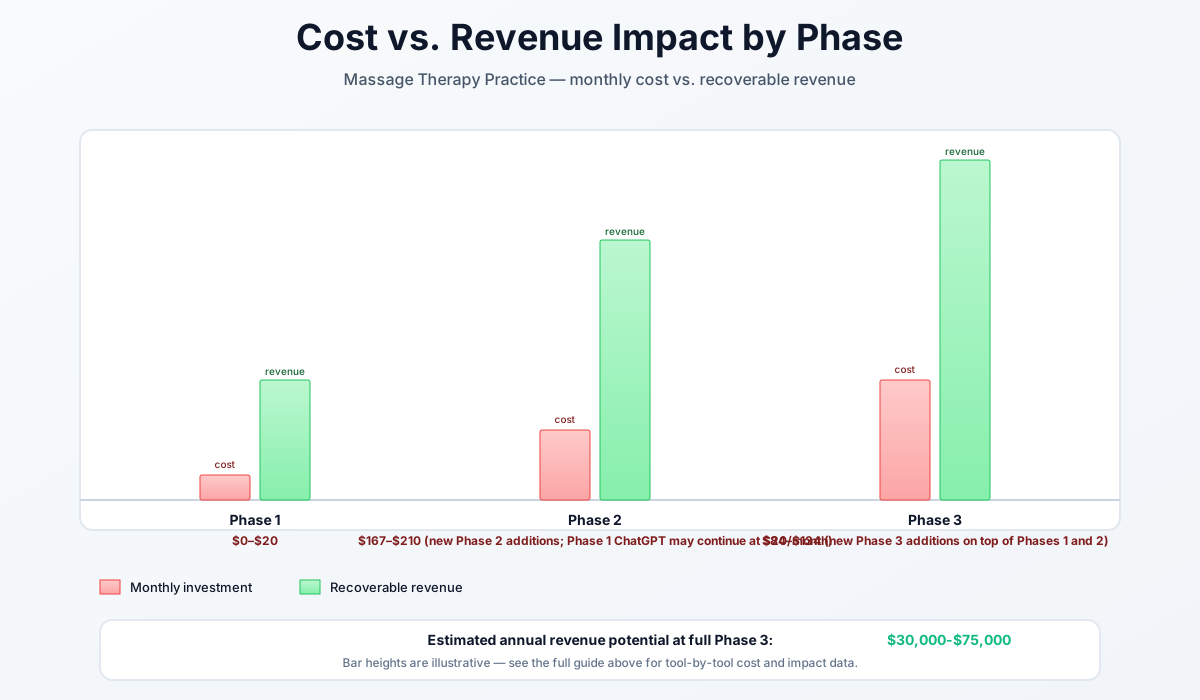
| Solo, full AI stack (this guide) | 62–72% | 22–34% | 3–6% | $108K–$148K |
| Multi-therapist, full AI stack | 65–75% | 28–38% | 3–5% | $115K–$158K/table |
Sources: AMTA 2025 industry survey, ClinicSense aggregate customer data, independent practitioner surveys compiled 2025–2026.
A 20-point rebooking improvement on a $100K practice isn't a rounding error — it's $18,000–$24,000 in incremental annual revenue without a single new client. The membership column matters too: practices with 25%+ membership penetration report income volatility 40–60% lower than session-only books, because MRR smooths out the seasonal dips that otherwise kill cash flow in January and August.
The empty-slot math is equally unforgiving. At $85–$165 per 60-minute session, three no-shows a week costs a solo therapist $13,260–$25,740 annually. Unlike a restaurant, where labor costs drop with fewer covers, your fixed costs — rent, software, linens, liability insurance — don't move. A slot that goes unfilled is pure margin gone.
AMTA data also shows average career length at 5–8 years before physical wear or burnout ends practice. Unpaid documentation hours are a direct contributor. Cutting two hours of notes a week isn't a productivity optimization — it's how you stay in the field.
Adjacent verticals face similar math. Chiropractic offices and physical therapy practices share the rebooking economics; yoga studios share the membership dynamics. The AI playbook overlaps, but the compliance constraints and specific tools differ enough that each vertical needs its own analysis.
Compliance framework — read this once before evaluating any tool
Every AI tool in this guide gets measured against four constraints: HIPAA, TCPA, state licensure, and scope of practice. Understanding the framework takes 10 minutes. Misunderstanding it costs thousands in penalties or, worse, a board complaint.
When massage therapy becomes a HIPAA-covered activity
Being licensed doesn't automatically make you a HIPAA covered entity. You become one the moment you electronically transmit protected health information (PHI) as part of a covered transaction — in practice, that almost always means billing insurance: PI/auto claims, certain FSA/HSA reimbursement workflows. Cash-pay, paper notes? Technically outside HIPAA. But cloud-based SOAP notes are a grey area, and the safer default is to choose BAA-backed tools from the start and avoid the question entirely.
Once you cross the HIPAA threshold, you need a signed Business Associate Agreement with every vendor that touches PHI, plus administrative and technical safeguards, plus a breach-notification process. That's not optional paperwork — it's the contractual evidence you produce when an insurer or plaintiff's attorney asks.
| Use case | HIPAA-safe? | What to use |
|---|---|---|
| Drafting a SOAP note using ChatGPT with initials only, zero identifying details | Technically outside HIPAA scope (no PHI in prompt) | ChatGPT Plus or Claude Pro at $20/mo |
| Drafting a SOAP note with client names, conditions, dates of birth, insurance info | NOT compliant without a BAA | Twofold Health, Jane AI Scribe, or Noterro Scribe |
| Writing marketing copy that mentions no individual client | No PHI involved | Any AI tool |
| Replying to a Google review that mentions a client's condition | Risky — you cannot confirm or discuss PHI publicly | Generic warm replies only |
The "ChatGPT with initials" approach is a legitimate starting point — you get the time savings while you evaluate the BAA-backed upgrade. But it has a clear expiration date. Get onto a compliant tool before any insurance billing engagement or client complaint forces the issue.
TCPA — the rule that bites small practices
The Telephone Consumer Protection Act governs every promotional SMS. Penalties run $500–$1,500 per message, and class actions over unconsented texts reach small businesses regularly. You need express written consent captured at a specific opt-in moment — not buried in general intake language — plus clear disclosure of sender, frequency, and a working opt-out.
Add a standalone checkbox to your digital intake form that reads:
☐ I agree to receive promotional text messages from [Practice Name] about appointment offers, last-minute openings, and seasonal promotions. Message frequency varies. Reply STOP to opt out at any time. Standard message and data rates may apply.
Appointment reminders for already-booked clients are generally transactional, not promotional. But getting express written consent for everything is the cleaner approach.
Scope of practice — the three hard lines
Your state board defines what you can do clinically. Three things AI tools must never do on your behalf:
- Assess contraindications. A chatbot that says "yes, deep tissue is safe for your DVT history" is practicing outside scope on your license. Your intake form, reviewed by you, is the screening tool — always.
- Diagnose. Massage therapists assess; they do not diagnose. AI-drafted SOAP notes must use assessment language ("client reports," "palpation reveals tightness consistent with..."), not diagnostic language ("client has rotator cuff tendinopathy").
- Make treatment decisions. AI drafts the plan; you sign it.
Build this into every tool you deploy: any AI receptionist or chatbot routes medical and contraindication questions to you — never answers them.
The audit-trail question every practice should answer
If a state board, insurer, or plaintiff's attorney asked tomorrow: "Show me your AI tool inventory, your BAAs, your TCPA consent records, and your documentation that a licensed clinician reviewed and signed every AI-drafted note" — could you produce it within an hour? If not, build that file before you scale your AI stack.
Rebooking, retention, and the calls you're currently missing
This is where the revenue recovery happens. Booking automation and retention messaging deserve your attention first, before you think about SOAP notes or bookkeeping.
Why your phone is your biggest leak
You're in a session. Phone rings. You can't break draping, scope, or the trust of the client on your table to answer. Caller hits voicemail. Voicemails convert to bookings at low single-digit rates, because that caller is already scanning the next Google Maps listing — and the next one picked up.
AI receptionists answer in 1–2 rings, walk callers through your FAQ, and book directly into your scheduling system. Two products worth evaluating:
My AI Front Desk
Best for: Solo and 2–3 therapist practices
24/7 AI phone answering with FAQ training, appointment booking via Zapier into ClinicSense, Jane, Vagaro, MINDBODY, Calendly, or Acuity. Sends confirmation texts automatically and transfers complex calls to a human when configured. 7-day free trial. The same underlying architecture shows up in our barbershop, nail salon, and yoga studio guides.
Goodcall
Best for: Lower-volume practices wanting flat-rate pricing
Flat-rate by unique callers per month rather than per-minute, which makes monthly costs predictable. Integrates with Google Calendar, Calendly, and via integration with Vagaro and MINDBODY. 14-day fully-featured trial. Also covered in our cleaning service and fencing company guides.
At $85–$165 per session and a 3-visit average initial lifetime value, recovering one missed new-client call per week adds $13,260–$25,740 in annual revenue. The tool costs $79–$99/month.
Configuration matters more than which product you pick. Forward calls only after 2–3 rings so your regulars can still reach you directly. Build out the FAQ knowledge base in week one — services, prices, modalities, parking, what to wear, cancellation policy. Hard-code a transfer trigger for any clinical question: "Can I get a massage if I'm in chemo?" takes a message; the bot does not answer it. Review call transcripts daily for the first week to catch gaps before they become missed bookings.
No-show defense — what actually works
Most practice management platforms include automated reminders. Most practices have never turned them on. Log in today, find the notifications settings, and enable a 48-hour email reminder and a 24-hour SMS reminder for every appointment. That alone cuts no-shows 25–40% and costs nothing extra.
The structural fix goes further: card-on-file plus automatic cancellation-fee charging plus automated waitlist filling.
ClinicSense
Best for: Solo to 3-therapist independent practices
Massage-therapy-specific practice management with No-Show Guard (automatic card charging per your policy), automated waitlist (instant SMS to next-in-line when a slot opens), Smart Availability email campaigns, and HIPAA-grade SOAP notes. The Standard plan ($69/mo) is the sweet spot for most independent practices. 14-day free trial, no credit card required.
The policy that actually sticks: 24-hour cancellation window with a $25–$50 first-occurrence fee. Don't start at full session cost — that's the policy that ends up in a one-star Google review about being "charged $150 for getting sick." Require card-on-file at booking; the deterrent effect holds even when you rarely charge. Enable the waitlist on your public booking page so clients self-add. Send a 2-weeks-ahead announcement to your existing book before any of this goes live.
For a solo therapist seeing 25 sessions a week, the expected lift is $5,000–$20,000/year in recovered slot revenue and fees.
Turning one-time clients into members
Ask for the rebook at checkout. That single habit — before the client reaches the door — is the highest-leverage retention move you have, and it's free. Industry data puts the lift at roughly 29% compared to letting them say "I'll call." Your software can prompt it on screen; the habit is still human. Train it first.
After the checkout ask, three automated sequences cover 80% of the remaining retention gap:
Win-back at 30 and 45 days. Trigger when a client hasn't booked in 30 days. First email: a warm "we miss you" with a specific value offer, not a discount ("your next deep tissue includes 15 free minutes of hot stone work"). Second email at 45 days with soft urgency. Mailchimp ($13/mo Essentials, 500 contacts) handles this cleanly, or for behavioral triggers tied to scheduling data, ActiveCampaign at $15/mo Starter — the same tool we recommend for gyms and fitness studios.
Unused package reminders. A 5-pack with 3 sessions unused at day 90 is both client risk (they'll feel ripped off when they expire) and your operational risk (revenue already collected, service still owed). Auto-text: "you still have 3 sessions — here's the booking link."
Membership churn signals. A member who drops from weekly to monthly is telling you something. ClinicSense and Jane both surface usage frequency; when it drops below a threshold, use personal outreach — a text or call from you — not an automated email. That's the intervention that actually prevents cancellation.
Write a 150-word win-back email for a massage therapy client who hasn't booked in 30 days. Subject line should create curiosity, not guilt. Body should acknowledge they've been busy, offer a specific value add (not a discount) such as "your next deep tissue session includes 15 free minutes of hot stone work or trigger point focus," and make rebooking feel easy with a direct link placeholder. Tone: warm, expert, not desperate. Sign off from [Therapist First Name].
Generate two distinct subject-line and body variations so I can A/B test in Mailchimp.
One compliance note applies here: SMS retention messages need TCPA-compliant express written consent on file. Email is governed by CAN-SPAM, which is more permissive but still requires a working unsubscribe and an honest "from" line.
For most solo and 2–3 therapist practices, a separate website chatbot is a distraction. A clean booking page plus a 24/7 AI receptionist covers the same ground with one fewer system to maintain. Revisit when you cross 4+ therapists or open a second location.
Documentation AI — getting your evenings back
A busy therapist writes 4–7 hours of notes per week, almost always unpaid. The work is necessary — notes are required for treatment continuity, insurance reimbursement, and malpractice defense — but writing from scratch between back-to-back sessions, or batching everything at 9 PM, is what shortens careers. AI cuts this from 10–12 minutes per session to 2–3.
Starting free with ChatGPT or Claude
Subscribe to ChatGPT Plus or Claude Pro ($20/month). After each session, dictate 5 bullet points into your phone's voice memo app: (1) what the client reported and pain scale before, (2) areas worked and techniques used, (3) pressure level and tolerance, (4) what you observed in tissue quality, range of motion, and posture, (5) plan for next session. iPhone Notes auto-transcribes; Android's Recorder app does the same. Paste the transcript into the prompt below.
I am a licensed massage therapist. Here are my session notes (use 'the client' instead of any name): [paste 5 bullet points].
Write a professional SOAP note in standard massage therapy format:
- Subjective: client-reported symptoms, pain scale, history, goals
- Objective: techniques used, areas treated, pressure, palpation findings, range-of-motion observations
- Assessment: client's response to treatment, progress toward stated goals, tissue quality changes
- Plan: focus for next session, recommended frequency, any home-care suggestions within scope
Use clinical but readable language. Use assessment terminology, not diagnostic terminology — I assess, I do not diagnose. Do not invent any findings I did not mention. Keep it under 200 words.
One rule you cannot skip: no client names, dates of birth, insurance details, or other identifying PHI in the prompt until you're on a BAA-backed tool. Use initials or "the client." This keeps you outside HIPAA scope while you evaluate the upgrade path.
Upgrading to a BAA-backed AI scribe
When you start billing insurance, when you want client names in the prompt for more accurate notes, or when volume justifies the cost — switch to a dedicated AI scribe with a signed BAA.
Twofold Health
Best for: Solo therapists wanting predictable flat-rate pricing
Purpose-built AI scribe for allied health including massage. Generate insurance-grade SOAP notes from a 3–5 sentence recap. Unlimited notes, signed BAA included, no per-credit fees. Outputs paste into ClinicSense, Jane, Noterro, or any EHR. 7-day free trial, no credit card.
Jane App (with AI Scribe)
Best for: 2+ practitioner clinics wanting one integrated platform
Full practice management for allied health with embedded AI Scribe and 1,000+ community-built charting templates. Base plans (Balance $54/mo, Practice $79/mo, Thrive $99/mo) include 5 free AI Scribe notes per month; unlimited AI Scribe is a $15/month add-on per staff profile. Higher cost than standalone scribes but consolidates scheduling, notes, payments, intake, and AI documentation. Same platform we recommend in our physical therapy guide. 14-day trial.
Noterro Scribe
Best for: Noterro users wanting embedded voice-to-chart
Voice-to-chart AI scribe embedded directly in the Noterro practice management sidebar. Credit-based usage (~16 credits/minute, $0.01/credit). Recordings are deleted after analysis and never used for AI training. Good fit if you're already on Noterro or moving to it.
The decision tree is simple: already on ClinicSense or another non-Jane platform with minimal insurance billing — start with Twofold Health, cheapest path to BAA-backed compliance with no platform switch. Considering a full-platform consolidation with 2+ practitioners — Jane App with embedded AI Scribe. Want everything in one tool and don't mind credit-based usage — Noterro.
Intake forms and contraindication screening
Intake forms screen for contraindications: blood clots, recent surgery, undiagnosed pain, certain medications, pregnancy considerations. The form itself can be AI-drafted; ChatGPT produces plain-English yes/no questions with parenthetical examples well. But the decision about whether a client is safe to receive massage is yours, every time, on your license. AI flags; you decide.
Two dictation patterns that work
Sink dictation. While you wash your hands and reset linens between clients, dictate the session recap into your phone in 60–90 seconds. By the time you reach the front desk, the transcript is ready to paste.
End-of-day batch. Dictate a 30-second voice memo after each session, then run all of them through the AI scribe at the end of the day in one focused 20-minute block.
Pick one and stick with it for two weeks before judging. The first five notes always feel awkward. By note 20, the rhythm is automatic.
Back office — bookkeeping, payroll, and insurance billing
A massage practice has more income streams than most service businesses: sessions, packages, memberships, gift certificates, retail, tips (cash and card, taxable and not), and insurance reimbursements. Reconciling all of it monthly is where solo owners lose another 4–8 hours — and where deductions get missed at tax time.
QuickBooks Online (Simple Start)
Best for: Solo practices with mixed revenue streams
AI auto-categorizes transactions (sessions, packages, retail, tips, expenses), reconciles bank and card activity, flags deductions year-round (CE courses, linens, oils, equipment, home-office for mobile therapists), and surfaces quarterly estimated tax payments before they're late. Native integrations with Square, Stripe, MINDBODY, Vagaro, Jane, and ClinicSense. Same recommendation across our hair salon and nail salon guides.
In practice, a solo therapist typically recovers 3–5 hours per month once auto-categorization is trained (60–90 days of corrections gets accuracy above 90%), finds $1,000–$3,000/year in deductions Intuit Assist flags that owners miss (CE courses, supplies, laundry, home-office for mobile work), and avoids $200–$1,000 in quarterly estimated tax penalties. The one setup step that matters: connect Square or Stripe on day one so session revenue, tips, and retail flow in with correct dates. Manual entry kills the auto-categorization benefit.
The moment you bring on a second therapist, payroll becomes its own job. Commission splits (typically 40–55%), tip reconciliation, contractor classification, and 1099-NEC year-end filings pile up fast.
Gusto
Best for: Clinics with 2–10 W-2 or 1099 therapists
Automated payroll with AI verification of commissions and tax withholding, automatic 1099 generation for contractor therapists, federal/state/local tax filings, and contractor classification compliance monitoring. Contractor-only plan at $35/mo + $6/contractor for practices paying only 1099s. Same tool we recommend for barbershops and coffee shops.
On insurance billing: massage billing (PI/auto claims primarily, some HSA/FSA) is genuinely complex — ICD-10 coding, medical necessity documentation, claim scrubbing, denial management. Two practical paths: use your practice management platform's billing module (Jane and ClinicSense both produce CMS-1500 forms), or outsource to a $300–$600/month massage-specialized billing service for the first six months and bring it in-house once you understand how claims fail. If you're cash-pay and not chasing insurance revenue, don't add it because someone told you AI makes billing easier. The complexity isn't worth it.
One operations note for membership management: automated unused-package reminders when a session hasn't been used in 30 days (ClinicSense and Jane both support this natively) protect you from the unhappy client who discovers their sessions expired in April. Set them up when you turn on the membership program, not after the first complaint.
Mobile therapists have a different tax picture — mileage, home office, table and supply costs, and pass-through income from platforms like Soothe or Zeel. QuickBooks Simple Start handles all of it; the discipline is tagging mileage in the mobile app at the time of the trip, not reconstructing it from memory in April.
Six mistakes worth naming explicitly
Buying Podium or Birdeye for review management at a solo or 2-therapist practice. These platforms ($299–$599/mo) are priced for multi-location chains. Your practice management platform's built-in review-request automation covers 80% of the same ground at no additional cost.
Switching to Zenoti as your primary platform unless you're running 5+ locations. Implementation fees alone ($5K–$20K) outweigh the differentiation versus ClinicSense or Jane for independents.
Putting client names or PHI into ChatGPT before having a BAA in place. The "use initials" workaround is fine. Including identifying information is not.
Letting an AI receptionist field clinical questions. Hard-code "transfer to human for any medical question" or you're delegating scope-of-practice decisions to a chatbot.
Accepting AI SOAP drafts without reading them. You are the licensed signatory. AI writes first drafts; you read, correct, and sign every note.
Sending SMS marketing without express written consent. Add the standalone TCPA checkbox to your intake form before turning on any SMS automation.
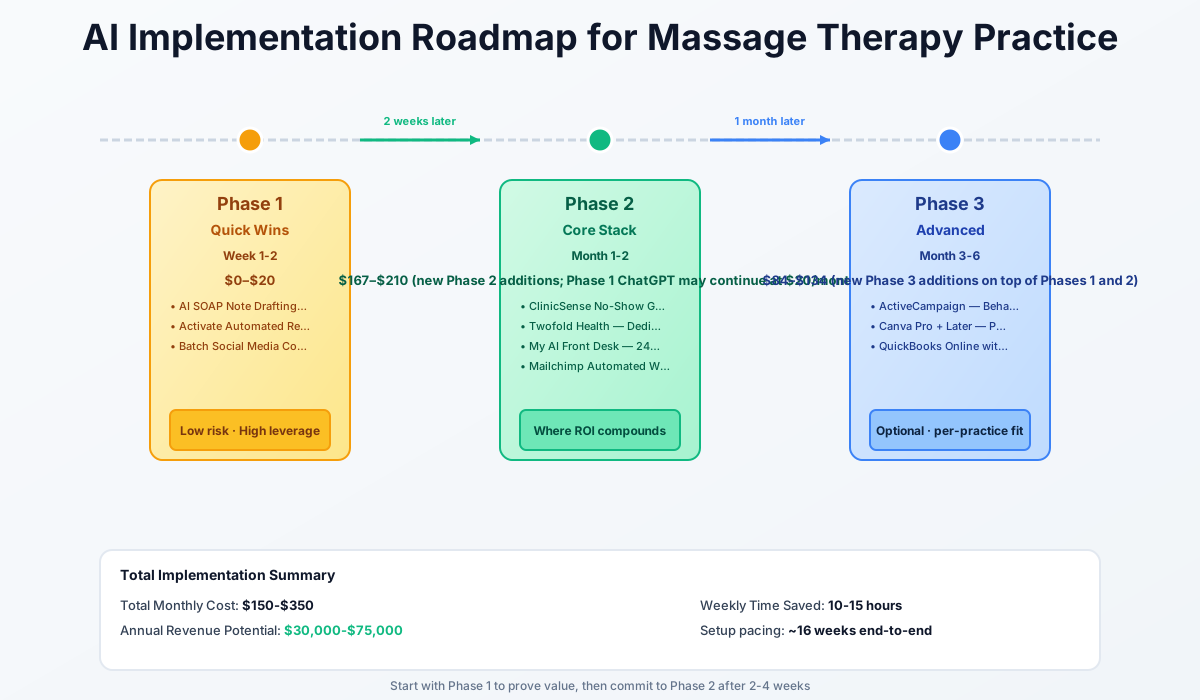
Your 30-day starting sequence
Run this in order. Don't skip ahead.
- Week 1, Day 1: Subscribe to ChatGPT Plus or Claude Pro ($20/mo). Save the SOAP-note prompt from this guide to your phone's Notes app.
- Week 1, Day 2: Log into your existing practice management platform and turn on 48-hour email and 24-hour SMS appointment reminders. Most practices have never enabled these.
- Week 1, Day 3: Add a TCPA-compliant SMS consent checkbox to your intake form using the exact language from the compliance section above.
- Week 1, Day 4: Dictate your first 5 SOAP notes via voice memo, transcribe, and run through the prompt. Use 'the client' — no PHI yet.
- Week 1, Day 5: Enable card-on-file at booking in your platform. Announce a 24-hour cancellation policy ($25–$50 fee) to existing clients via email.
- Week 2: Start free trials of ClinicSense (14-day) and My AI Front Desk (7-day). Run the AI receptionist trial during your busiest clinical days — that's when it earns its keep.
- Week 3: Decide on your AI scribe path — Twofold Health, Jane AI Scribe, or Noterro Scribe. Sign the BAA before the first PHI-included note.
- Week 4: Time yourself on 5 SOAP notes using the AI workflow versus your old method. Measure the no-show rate change. Calculate one month of AI receptionist call volume. Decide what to keep, what to drop.
- Day 30 onward: Add ClinicSense No-Show Guard, your BAA-backed scribe, and the live AI receptionist only if the first three weeks produced measurable wins. Fix the workflow before adding more tools.
FAQ
Can I use ChatGPT for SOAP notes if I'm cash-pay and don't have a BAA?
Yes — with one hard constraint. Your prompts must contain zero identifying information: no client names, no dates of birth, no insurance details, no specific dates of service tied to a named individual. Use "the client" or initials. Stay behind that line and you're technically outside HIPAA's scope. The moment you want identifying detail for better note accuracy, or you start billing any third-party payer, the workaround expires. Switch to Twofold Health, Jane AI Scribe, or Noterro Scribe — and sign the BAA — before that happens.
Will an AI phone receptionist handle contraindication questions correctly?
Only if you build it that way. "Is massage safe during pregnancy?" "Can I get worked on if I had surgery last week?" "I'm in chemo, is this okay?" — none of these should be answered by a bot. Hard-code a transfer trigger for any clinical question, and test it explicitly before you go live: call your own AI receptionist and throw deliberate edge cases at it. A bot saying "yes, prenatal massage is generally safe" is making a clinical determination on your license. Keep the knowledge base focused on logistics — hours, parking, pricing, services — and route everything clinical to you.
How do I structure a cancellation policy when half my book is on packages?
Two policies, not one. Standard cancellation fee for full-price single sessions ($25–$50 first occurrence, escalating with repeat behavior). For package clients: "you forfeit one session from your package." Functionally a higher penalty, but it doesn't feel punitive because no card is charged. Document both at booking and in your reminder messages. Most platforms support different policies by appointment type — check before assuming you need a workaround.
What does a PI insurer audit actually look for in AI-assisted notes?
Three things, mostly: that a licensed clinician signed the final note (not just the AI), that the note uses medical-necessity language consistent with what they're being asked to pay for, and that there's an audit trail showing who accessed the record and when. Your BAA is the contractual evidence the vendor is bound to HIPAA safeguards. Produce the signed BAA, the vendor's security documentation, and the audit logs. The note itself needs to read like a clinician reviewed it — because you should have. If you've been accepting AI drafts without reading them, an audit surfaces that fast.
How do I keep AI SOAP notes from drifting into diagnostic language?
Add explicit language to your default prompt: "Use assessment terminology only — phrases like 'client reports,' 'palpation reveals,' 'tissue quality consistent with,' 'range of motion limited at.' Do not use diagnostic terminology such as 'client has [condition],' 'diagnosed with,' or 'suffering from.' Note client-reported diagnoses only as 'client reports a history of [condition diagnosed elsewhere].'" Save that as your permanent template and spot-check five notes per month to confirm the model is staying in scope. Models drift when you change input formats — correct it and re-save when it does.
Is a membership program actually worth the operational overhead?
For most practices with 15+ regular clients, yes — substantially. Practices with 25%+ membership penetration report income volatility 40–60% lower than session-only books. The overhead is real: you need a platform that tracks usage, sends unused-session reminders, and flags churn signals automatically. ClinicSense and Jane both handle this natively. The place memberships go wrong is when practices set them up without the automated usage tracking — sessions pile up, clients feel cheated when they expire, and the resulting complaints cost more goodwill than the MRR was worth. Set up the automation before you launch the program.
What's the deal with Aescape robotic massage tables?
Aescape's commercial deployments at Equinox, Marriott, and Massage Envy are positioned as automated wellness sessions, not the practice of massage therapy as defined by state licensure — so the licensed-therapist-on-site requirement likely doesn't apply. For an independent practitioner, the $105K capital cost and $10K/year service fee put it out of reach anyway. Worth watching if a home or studio version emerges, but not worth planning around in the next 12 months.
Start with Day 1: subscribe to ChatGPT or Claude, save the SOAP note prompt, and dictate your first session recap today. The hardest part isn't choosing tools. It's making the first five notes feel less awkward than the old way. Five notes is one afternoon.
More AI Implementation Guides
AI Tools for Home Health Care Agencies: 2026 Guide
A practical 2026 guide to AI tools for home health care agencies — HIPAA-safe automation for shift-filling, OASIS-E documentation, EVV, and claim denials.
AI Tools for Dermatology Practices: 2026 Guide
The best AI tools for dermatology practices in 2026 — cut prior-auth hours, reduce no-shows, and grow your cosmetic line, with a HIPAA-first rollout plan.
AI Tools for Mental Health Practice: 2026 Therapist Guide
Best AI tools for mental health practices in 2026: HIPAA-compliant scribes, measurement-based care, no-show reduction, and intake automation for therapists.
AI Tools for Optometry Practices: 2026 Guide
AI tools for optometry practices in 2026: HIPAA-safe scribes, ABB Verify, dual vision/medical billing, OCT AI, and a phased plan independents can run.
Best AI Chatbot & Lead Conversion Tools for Med Spas
Compare AI chatbots, lead conversion & generation tools for med spas. Capture missed calls 24/7, book online, recover $5K-$15K/mo in lost leads. See picks.
AI Tools for Physical Therapy Practices (2026)
The best AI tools for physical therapy practices in 2026. HIPAA-compliant solutions for documentation, scheduling, HEP delivery, and billing automation.
Keep exploring
See every AI implementation guide we've published for Healthcare, or browse the full library by industry or category. Looking for a specific platform? The AI tools directory indexes every product mentioned across our guides, and the comparisons hub puts the most-asked head-to-heads side by side.