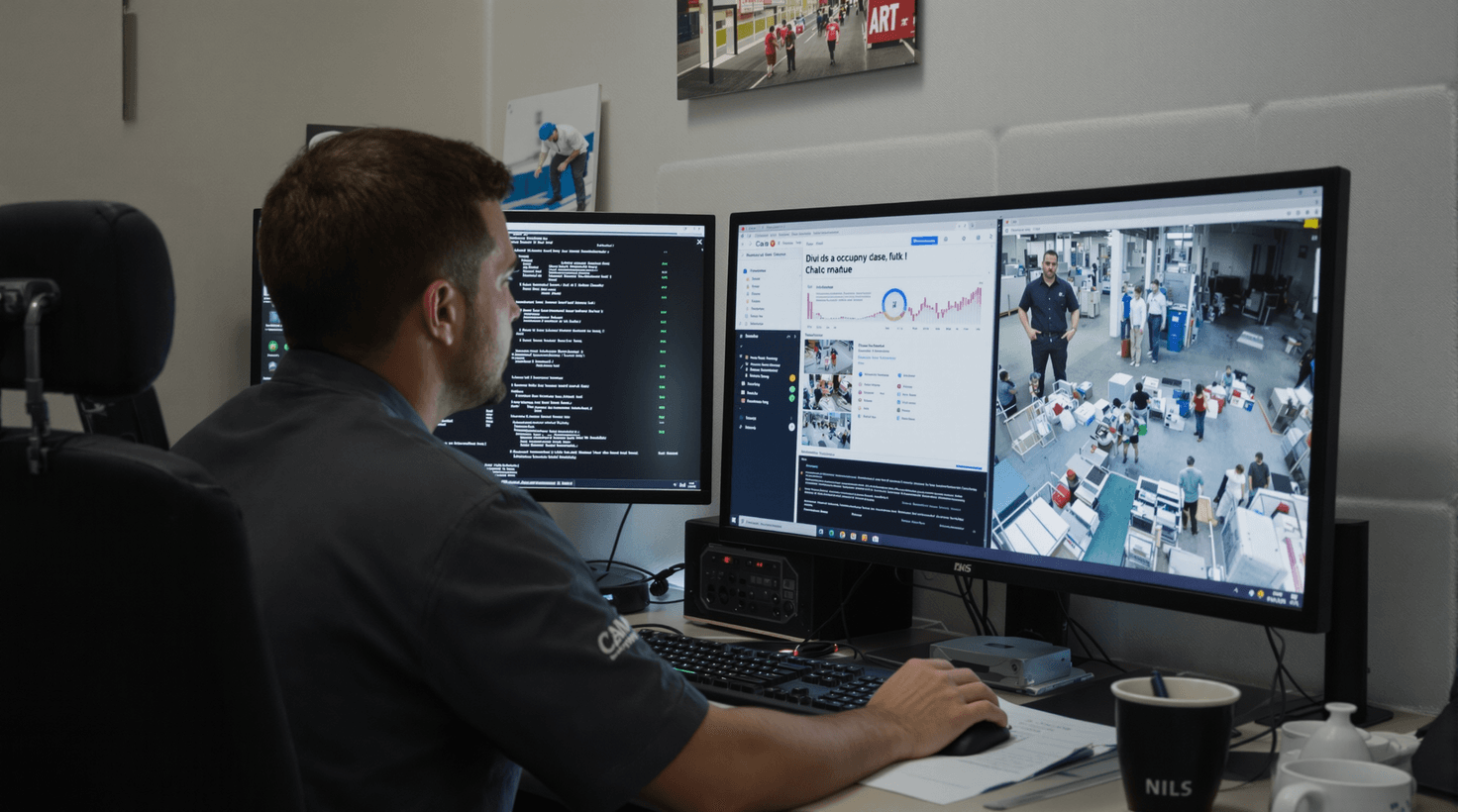
It's 7:43 PM on a Thursday. A couple just signed a lease on their first house and realized they need somewhere to put the contents of two apartments while they renovate. They Google "storage near me," find three facilities, and call all three. Two go to voicemail. The third — a Public Storage — answers on the first ring with a polished AI voice agent, texts them a unit recommendation, and completes the rental before the couple finishes dinner. That's $175/month your facility just lost. Five or six of those calls a week, and you're looking at $12,000–$15,000 in annual revenue disappearing into voicemail boxes.
Self-storage is one of the most occupancy-sensitive businesses in commercial real estate. At 85% occupancy your facility is probably profitable. At 92% it's genuinely lucrative. That 7-point difference — roughly 21 units on a 300-unit property at $150/month each — is $37,800 a year in revenue. But the business is also near-fixed-cost: your mortgage, insurance, utilities, and base staffing don't change much whether you're at 82% or 94%. Every occupied unit beyond your break-even is almost pure margin.
That's why the operators pulling away from the pack in 2026 aren't competing on location or price. They're competing on capture rate: answering every inquiry, converting website visitors to online rentals, filling vacant units faster, and keeping existing tenants paying on time. REITs like Public Storage, Extra Space, and CubeSmart have spent years building AI operations that do exactly that. The tools they use aren't proprietary anymore. Many are available to single-facility operators for $50–$750/month.
This guide covers every AI tool worth serious consideration — organized by the problems they solve rather than by cost tier. A meaningful share of new-tenant demand is driven by the same life event that fills a moving truck — see our moving company guide for how the after-hours lead-capture playbook looks on that side of the transaction.
TL;DR — Top 3 Recommendations
- Start free: Use ChatGPT to run a competitive pricing analysis and draft rate increase letters — this alone can recover $2,000–$8,000/month in deferred revenue
- Capture after-hours leads: Deploy swivl ($contact for pricing) or SpiderCall AI to answer calls 24/7 — each missed lead costs $1,500–$3,000+ in lifetime revenue
- Automate delinquency: SpiderDoor Debt Collector ($99/month) or AI Lean ($750/month) cuts collection time by 70% and keeps you compliant with state lien laws
The Occupancy Math You Need to Know
Before adding any tool, understand exactly what each occupancy point is worth at your facility. Most operators have a rough sense of this; very few have it written down.
| Physical Occupancy | Units Rented (300-unit facility) | Monthly Revenue at $150 avg | Annual Revenue | vs. 85% Baseline |
|---|---|---|---|---|
| 82% | 246 | $36,900 | $442,800 | –$21,600 |
| 85% | 255 | $38,250 | $459,000 | baseline |
| 88% | 264 | $39,600 | $475,200 | +$16,200 |
| 91% | 273 | $40,950 | $491,400 | +$32,400 |
| 94% | 282 | $42,300 | $507,600 | +$48,600 |
At near-fixed costs, moving from 85% to 91% doesn't just add $32,400 in revenue — most of it flows to the bottom line. That's the context for every number in this guide.
Economic occupancy is what you actually collect. Physical occupancy averages 87.4% nationally, but economic occupancy — rent collected divided by rent you could collect — typically runs 3–5 points lower because of delinquencies. That gap at a 300-unit facility averaging $150/month is $13,500–$22,500 walking out the door every year.
Your property management software — likely SiteLink, storEDGE (both now under the Storable umbrella), or Storage Commander — handles the basics. But if you're like most of the 75–85% of operators on a PMS, you're using maybe 40% of what it can do.
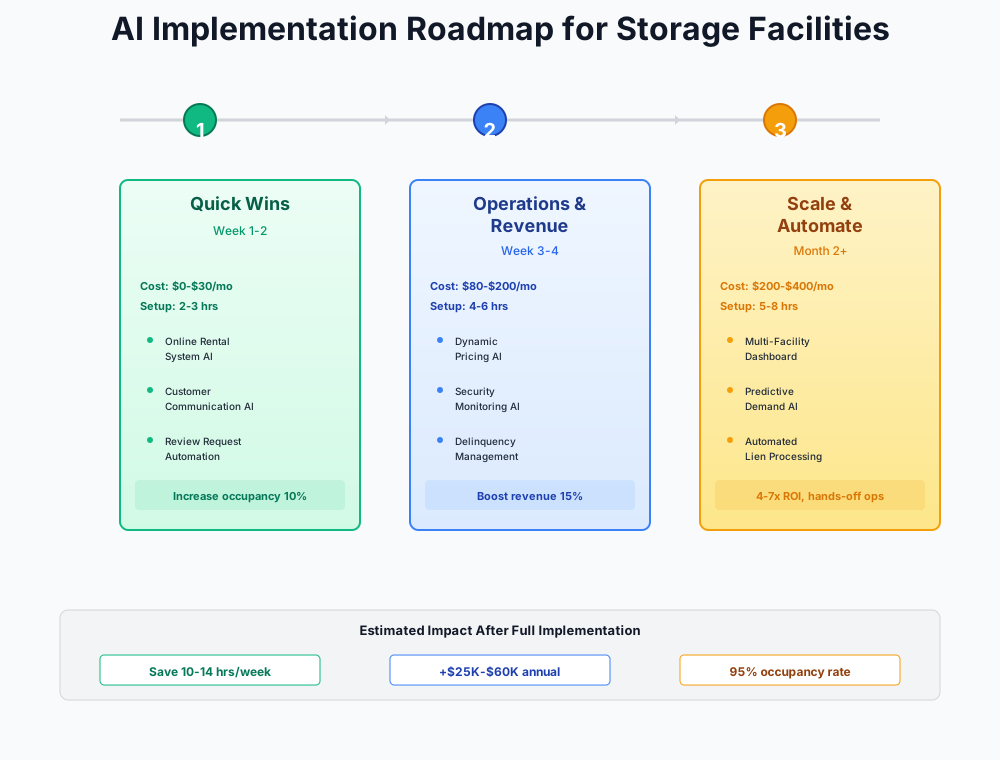
Here's a visual overview of the implementation roadmap:
Online Rental Conversion: The Fastest Win
Most renters have already decided they need storage before they ever call you. They're not comparing you to their own apartment — they're comparing you to the three other facilities that came up in the same Google search. The question is whether your website closes the deal or forces them to pick up the phone.
Industry data from StoragePug puts online rental conversion rates at 3–8% of site visitors for facilities with a modern, PMS-connected booking flow. Facilities without online rental capability convert at under 1%. That gap — on 1,000 monthly visitors — is the difference between 30 move-ins per month and 10.
Getting Your Website to Actually Rent Units
StoragePug
Best for: Facilities needing a modern site with AI unit size recommender and digital lease signing
Storage-specific website platform with built-in AI unit size recommender, PugSign digital lease signing, and online move-in processing tied to your PMS. SEO-optimized structure built specifically for local storage search rankings.
Storagely
Best for: Operators wanting a website + managed SEO + optimization for AI search engines (GEO)
AI-powered website platform with 24/7 AI chat, structured data optimization for AI search engines (Google AI Overview, ChatGPT Search), and optional Storagely+ managed marketing service. Annual plan waives the $500/location setup fee.
Connect your PMS so real-time availability and pricing display on the site. Enable digital lease signing so tenants can complete the entire rental at 2 AM without your manager waking up. The goal is zero friction between "I found your site" and "I have a lease" — the fewer steps, the higher your conversion rate.
Monitor your website conversion rate weekly for the first 60 days. Target 3–5% of visitors starting an online rental within 30 days of going live. If you're not hitting that, look at your unit size guide content first (thin content is usually the culprit), then your lease signing flow.
Write a detailed storage unit size guide for a self-storage facility website. For each size (5x5, 5x10, 10x10, 10x15, 10x20, 10x30), explain: what fits in it, who it's ideal for (college students, apartment downsizers, families, businesses), and include a real-world analogy (e.g., "about the size of a large walk-in closet"). Also include a section on climate-controlled vs. standard units and when climate control matters. Write in a helpful, non-salesy tone for someone who's never rented storage before. Target audience: people in [your city/region].
Two to three hours generating this content plus a 15–20 question FAQ page covering access hours, payment methods, climate control, security features, and your move-in process is free SEO work that compounds for years. This is similar to how real estate agencies use AI for listing content, except your content needs to rank for "storage near [your city]" searches rather than property listings.
93% of potential tenants visit your website before renting. If your site has thin content and no unit size guide, you're handing the SEO advantage to REITs who invest heavily in content.
ROI Snapshot
Monthly Cost
$100/mo
Time Saved
4hrs/week
Monthly Value
$5,200
ROI
5100%
Capturing After-Hours Leads
Even with online rentals, 20–40% of leads still pick up the phone. Most of those calls happen outside business hours — evenings, weekends, the five minutes after your manager leaves for the day. Each unanswered call is a real number: $1,500–$3,000+ in lifetime tenant revenue, gone.
AI Call Answering That Actually Closes Rentals
swivl
Best for: Single platform to automate tenant communications, lead follow-up, and after-hours rentals
The dominant AI automation platform built specifically for self-storage. Combines a CRM with four AI agents: Sales Agent (handles inquiries and completes rentals 24/7), Billing Agent (payment reminders), Support Agent (resolves tenant requests), and Review Agent (solicits and responds to reviews). Achieves approximately 80% automation — 8 in 10 conversations resolved without human involvement. Used by 3,500+ facilities. Integrates with SiteLink, storEDGE, and Storage Commander.
What 80% automation means in practice: your manager currently handles maybe 40–60 tenant interactions per week — calls about gate codes, unit availability, payment balances, office hours, access questions. swivl resolves roughly 32–48 of those automatically. Your manager handles the remaining 8–12 that actually require judgment: a tenant locked out of a damaged unit, a dispute about a charge, a complex multi-unit rental.
OpenTech Alliance INSOMNIAC AI Call Center
Best for: Facilities already using OpenTech kiosks who want AI + human hybrid call answering
AI voice agent "Megan" answers inbound calls 24/7 — handles rental inquiries, provides gate codes, and sends SMS confirmations. Human escalation to US-based Storage Counselors when the AI can't resolve an issue. Supports 2,200+ facilities.
XPS Solutions
Best for: High call volume facilities wanting live human agents backed by AI routing
Industry-leading call center (founded 2000) combining 104 hours/week of live US-based agent coverage with AI-assisted call routing and 24/7 IVR for automated payments. Best for operators who want a human voice on every rental call with AI handling overflow and after-hours.
To get swivl running: request a demo at tryswivl.com and ask specifically about single-facility pricing and ROI projections for your unit count. Once you're set up, connect to your PMS for real-time unit availability and pricing, then train the AI Sales Agent with your facility specifics — unit sizes, features, current promotions, gate hours, security details. Forward your facility phone number so after-hours calls route to the AI agent. Watch the automation rate dashboard; target 70%+ resolved without human involvement within 30 days.
ROI Snapshot
Monthly Cost
$350/mo
Time Saved
10hrs/week
Monthly Value
$6,500
ROI
1757%
Dynamic Rate Management
Static pricing leaves 8–15% of potential revenue on the table. REITs adjust rates daily using ML-driven demand forecasting. The tools that bring this to independent operators have matured significantly over the past two years.
The revenue math is straightforward. A 300-unit facility averaging $150/month with 87% occupancy generates roughly $470,000 annually. A 10% revenue lift from rate optimization adds $47,000/year — more than any other single tool on this list. Consistently the highest-ROI investment in the plan.
One important caveat: don't deploy dynamic pricing before running a competitive analysis. If your current rates are 15% below market, an AI pricing tool will optimize around an already-low starting point. Fix the baseline manually first, then let AI optimize from there.
Prorize SSRO (Self Storage Revenue Optimizer)
Best for: Facilities with 100+ units wanting the most sophisticated demand forecasting available
Uses hundreds of AI/ML algorithms that self-learn over time, generating 300,000+ demand forecasts daily across its client portfolio. Analyzes seasonality, price sensitivity, competitor rates, and sister property performance. Automated existing tenant rate increase recommendations. Clients report a minimum 10% revenue lift. 20+ years in self-storage revenue management.
Storable Revenue Management
Best for: Facilities already on SiteLink/storEDGE who want built-in AI pricing without another subscription
AI-generated rate recommendations based on occupancy thresholds, predictive churn analytics to identify at-risk tenants, and the new "Ask Your Data" AI Insights feature that lets you query your facility data in plain language. Less sophisticated than Prorize but included in your existing subscription. StorageAuctions.com integration acquired Feb 2025 for simplified auction workflows.
Radius+
Best for: Daily competitor pricing intelligence — pairs perfectly with Prorize or Storable Revenue Management
Tracks competitor pricing daily at the unit level across all nearby facilities. Real-time alerts when competitors change rates or launch promotions. AI-powered demand forecasting using housing permits, demographics, and employment data. Powers the 2026 Self-Storage Industry Forecast.
Pricing Intelligence You Can Run Today for Free
Most small operators check competitor rates quarterly at best. Many are priced 10–20% below market without realizing it. Every dollar you're underpriced per unit per month across 200 units costs $2,400/year.
I'm sharing screenshots of my competitors' pricing pages from their websites and SpareFoot listings. Please analyze these and create a comparison table showing: facility name, unit sizes offered, current street rates, and any active promotions (first month free, 50% off, etc.). Then identify: (1) which unit sizes I appear to be priced below market on, (2) which sizes I'm priced above market, and (3) promotional patterns I should consider matching or countering. My facility's current rates are: [list your rates by unit size].
How to run this:
- Visit the websites and SpareFoot listings for your 3–5 nearest competitors
- Screenshot their pricing pages (ChatGPT-4o can read images)
- Upload the screenshots with the prompt above
- Sign up for Radius+ and use your 5 free credits to pull professional market data for your zip code
- Adjust your street rates in your PMS for any unit sizes where you're clearly below market
Factor in Promotions
A competitor offering "first month free" on a 12-month average tenancy is effectively pricing 8% below their listed rate. Factor this in before you decide you're overpriced.
The Rate Increase Letters Your Manager Keeps Avoiding
Industry data shows 5–15% annual increases on existing tenants are the single easiest way to grow revenue without adding a unit. The reason most operators skip or delay them? Writing the letters feels awkward, and doing the math for each unit type takes time.
Write a tenant rate increase letter for my self-storage facility. The tenant's current rate is $[X]/month for a [10x10] unit. The new rate will be $[Y]/month, effective [date], which is 30 days from now. Tone should be professional but warm. Emphasize that this is the first increase in [X months/years], that we continue to invest in [security upgrades/facility improvements/new lighting], and that our rates remain competitive with nearby facilities. Include one sentence about how to contact us with questions. Keep it under 200 words.
Create a template library in a shared Google Doc with variants for each unit size. Then actually send the letters. If you haven't raised rates in 6+ months, you're almost certainly leaving $2,000–$8,000/month on the table.
ROI Snapshot
Monthly Cost
$0/mo
Time Saved
4hrs/week
Monthly Value
$5,400
ROI
Infinity%
Delinquency Automation
Chasing delinquent tenants eats 5–12 hours per week of your manager's time. At a 300-unit facility with a 6% delinquency rate, that's 18 tenants requiring follow-up at any given time — phone calls, texts, certified mail, and calendar tracking of state lien law deadlines.
Under 200 Units: SpiderDoor
SpiderDoor Debt Collector Suite
Best for: Facilities under 200 units wanting affordable delinquency automation
Sends automated emails, texts, and phone calls to delinquent tenants on a configurable schedule — up to 4 contacts per month per channel. Includes a 24/7 automated payment phone line so tenants can pay after hours without talking to anyone. Integrates with SiteLink via the SiteLink Marketplace.
Sign up at spiderdoor.com ($99 setup + $99/month), connect to your SiteLink PMS via the SiteLink Marketplace, then configure your communication sequence — Day 1 (friendly text), Day 5 (email + text), Day 10 (phone + email), Day 15 (final notice with lien warning). Add the 24/7 payment phone line ($99/month add-on) so tenants can pay at 11 PM without your manager involved. Operators who run this consistently report 4–8 hours saved per week on collection calls, plus $1,500–$4,000/month recovered through fewer write-offs and less auction turnover.
ROI Snapshot
Monthly Cost
$198/mo
Time Saved
6hrs/week
Monthly Value
$3,350
ROI
1592%
200+ Units or Multi-State: AI Lean
AI Lean
Best for: End-to-end lien compliance across all 50 states with automatic SCRA military protection screening
The only platform that automates the entire lien process from first late notice through auction execution with built-in state-specific legal compliance for all 50 states. Automatic SCRA (Servicemembers Civil Relief Act) flag prevents costly federal violations. Audit automation catches compliance errors before they reach auction. Trusted by 1,200+ facilities. Customers report delinquency rates reduced to under 2% (vs. industry average 5–8%) and 70% reduction in auction-related tasks.
At $750/month ($9,000/year), the break-even is clear: you need to save at least 10+ hours/month of manager time or prevent $10,000+/year in compliance-related losses. For a 300-unit facility with a 6% delinquency rate, that's 18 delinquent tenants requiring constant tracking across state-specific deadlines — well above break-even.
The SCRA screening alone can justify the cost. Enforcing a lien against an active-duty servicemember without a court order carries federal penalties that dwarf any annual subscription.
Your Online Reputation and Local Search Visibility
Facilities with 4.5+ stars on Google see measurably higher conversion rates on local searches. If you have unanswered negative reviews sitting on your Google My Business listing right now, each one is actively costing you tenants.
Responding to Reviews: Five Minutes a Week
Open ChatGPT or Claude — both have free tiers — and paste each unanswered review with this prompt:
Write a professional, friendly response to this Google review for my self-storage facility: "[paste review here]". The response should: thank the reviewer, address any specific concerns mentioned, highlight our commitment to security and cleanliness, and invite them to contact us directly if there's an unresolved issue. Keep it under 100 words and avoid sounding generic or corporate.
Read the draft, tweak anything facility-specific, and post it. Then set a 15-minute weekly calendar reminder to repeat this. Print a QR code linking to your Google review page and hand it to every new tenant at move-in.
Don't Copy-Paste Blindly
Always read AI-drafted review responses before posting. The AI doesn't know about that ongoing construction project or the gate that's been temperamental. One factually wrong response does more damage than no response at all.
Automating the Full Review Cycle
Review responses are the foundation. These tools automate the full cycle on top of that: requesting reviews at the right moments, monitoring all platforms, and drafting responses.
AgentiveReviews
Best for: Multi-platform review monitoring + automated review requests at an affordable price
Monitors reviews across Google, Yelp, Facebook, SpareFoot, and StorageSeeker. AI generates review request campaigns timed to tenant milestones (move-in, 6-month anniversary). AI response drafting trained on storage-specific terminology. Launched September 2025 — newer platform but purpose-built for self-storage.
StorageReach
Best for: Established platform with longer track record and deep PMS integrations
Automatically requests reviews at move-in and move-out, drafts AI responses to all Google reviews, and provides analytics on rating trends. Integrates with SiteLink, storEDGE, and Storage Commander. Backed by partnerships with White Label Storage and The Storage Agency.
Configure automated review requests at three trigger points: 3 days after move-in (when the experience is fresh and positive), at the 6-month anniversary, and after any positive customer service interaction. Target: 4.5+ stars with 50+ new reviews within 6 months.
AI Security: From Alarm Calls to Smart Detection
After-hours alarm calls are the leading driver of facility manager burnout and turnover. Most current CCTV systems are passive — they record incidents but don't prevent them.
Verkada
Best for: Enterprise-grade AI cameras with natural-language video search and remote management
Cloud-based AI security with edge processing. Person detection, vehicle detection, license plate recognition, and smart filtering that dramatically reduces false alarms. Natural-language video search: "show me all people near Building C between 11pm and 5am last week." Self-storage customers report incidents resolved in 10 minutes vs. 8 hours previously.
Deep Sentinel
Best for: Facilities with active security problems — live human guards intervene within 30 seconds
AI detects suspicious activity and connects a live human guard within 30 seconds for two-way audio intervention. Guards verbally warn intruders before a break-in occurs. Proactive deterrence rather than passive recording. Best for unmanned overnight facilities or locations with recurring break-in issues.
Start with 4–6 cameras at critical points: main gate, office, and building entry points. The combination of smart cameras with Nokē Smart Entry smart locks — which automatically revoke access for delinquent tenants and enable smartphone-based entry — is the foundation of the unmanned facility model. But don't rush to full unmanned operations until your AI systems are running smoothly.
One practical note on sequencing: a missed after-hours phone call costs $1,500–$3,000+ in lifetime tenant revenue and happens multiple times per week. A security incident costs $1,000–$10,000+ but happens far less frequently at most facilities. Prioritize AI call answering before cameras unless you've had more than two break-ins in the past year, or your manager is regularly responding to false alarm calls at night.
A Few Things to Skip (or Not Rush)
Smart locks for every unit right away. Nokē Smart Entry works well, but the upfront hardware cost for 200+ units is significant. Start with smart access at the gate level and evaluate per-unit locks after 6 months.
Annual contracts before you've tested. AI Lean offers 3 months free on annual contracts. Storagely waives setup fees on annual plans. These are good deals — after you've confirmed the tool works with your PMS and your manager can actually use it. Get 30 days month-to-month first.
Going fully unmanned in your first year of AI deployment. The unmanned model (swivl + Nokē + AI cameras + online rental) is real — 69% of operators plan AI implementation by 2026. But going staffless before your systems are debugged means lost revenue, security gaps, and frustrated tenants. Treat it as a 12-to-18-month goal.
Buying tools that duplicate your PMS. If you're on SiteLink or storEDGE, you already have AI rate recommendations, automated tenant communications, and the upcoming "Ask Your Data" AI Insights feature — included in your existing subscription. Check what you have before paying for a separate tool that does the same thing. The same trap catches operators in other service businesses — our guide to pest control AI tools covers a parallel version of this for field service software.
Your First-Week Checklist
- Open ChatGPT or Claude (free) and draft responses to all unanswered Google reviews — post them today
- Screenshot 3-5 competitors' pricing pages and run the AI competitive analysis prompt
- Identify unit sizes where you're underpriced by 10%+ and adjust street rates in your PMS
- Draft rate increase letters for any tenants who haven't had an increase in 6+ months
- Generate a unit size guide and FAQ page using AI — add them to your website this week
- Sign up for Radius+ and use your 5 free credits for professional market intelligence
- Request demos from swivl (lead capture) and SpiderDoor (delinquency automation)
- Calculate your current economic occupancy rate — this is your baseline metric
- Check your PMS (SiteLink/storEDGE) for built-in AI features you may not be using
- Set a 30-day calendar reminder to measure your delinquency rate, Google rating, and RevPASF (revenue per available square foot)
Start with items 1–5. They're free, they take less than a day, and the pricing corrections alone can add thousands per month. Schedule the demos from item 7 for next week. Don't skip item 8 — you can't measure improvement without a baseline.
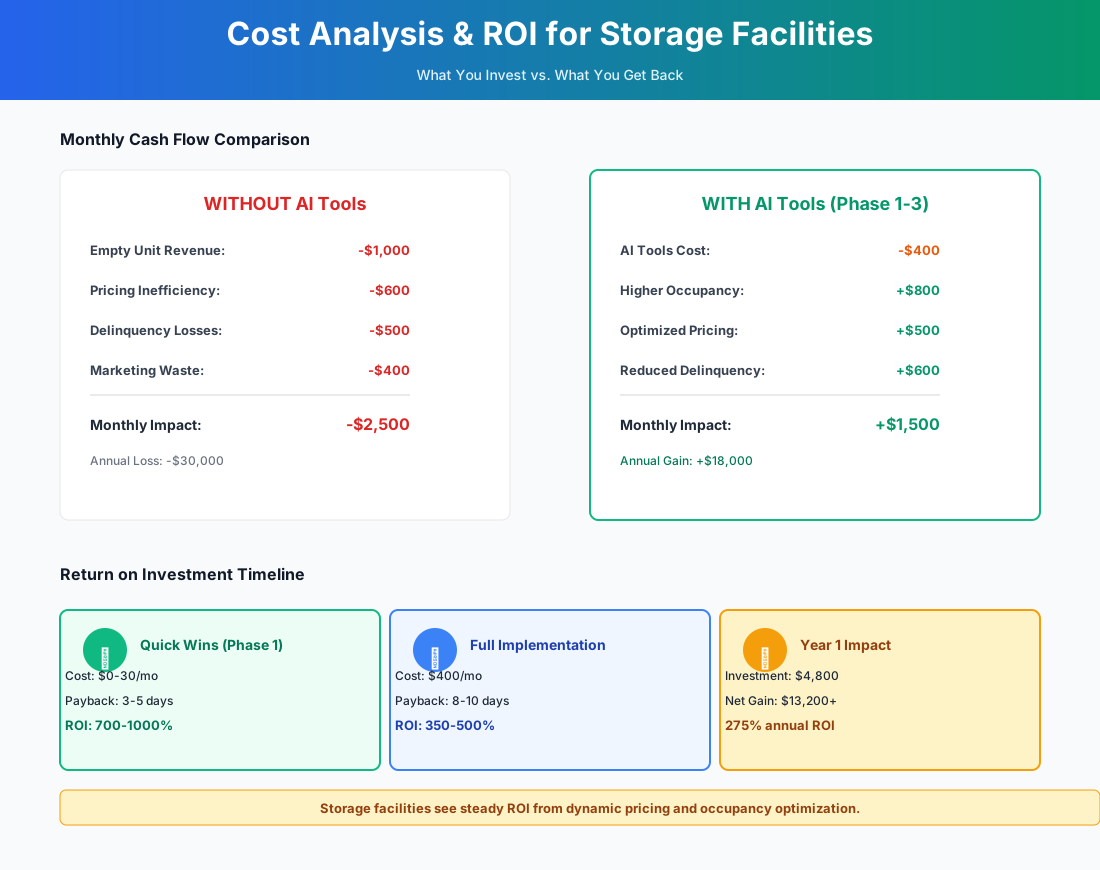
Here's a breakdown of the costs and expected returns:
Frequently Asked Questions
Can AI dynamic pricing comply with SCRA protections for active-duty military tenants?
Yes — but configuration matters. The Servicemembers Civil Relief Act prohibits enforcing storage liens against active-duty servicemembers without a court order, and some states extend protections to rate increases as well. AI Lean includes automatic SCRA screening that flags military tenants before any pricing or lien action is taken. If you're using Prorize or Storable Revenue Management without AI Lean, you'll need a manual process to exclude SCRA-protected tenants from automated rate increases. Ask your tool vendor directly how they handle this — if they can't answer clearly, that's a red flag.
What happens to my smart locks and AI call system during an internet outage?
Nokē Smart Entry locks use Bluetooth for primary access, so tenants can still open their units via the smartphone app when your internet is down — the app communicates directly with the lock. Real-time syncing with your PMS pauses until connectivity returns. For AI call systems like swivl and OpenTech, calls fail over to your facility phone line or voicemail during an outage. Keep a basic cell phone backup line that activates when your primary system drops. A $50/month backup hotspot is cheap insurance if your area has unreliable internet.
How do I handle lien auctions across multiple states?
Each state has different lien statutes: notice periods range from 14 to 90 days, some require certified mail while others accept email, and SCRA protections must be verified in every case. AI Lean maintains state-specific compliance sequences for all 50 states and automatically generates the correct notice chain for your location. Smaller operators on a single-state, under-200-unit property should track deadlines manually using a state-specific checklist — your state's Self Storage Association chapter typically publishes one.
Will my SpareFoot and StorageCafe rates update automatically when I use dynamic pricing?
Not automatically in most cases. Prorize and Storable Revenue Management push rate changes to your PMS, but SpareFoot and StorageCafe listings often require separate updates. Some PMS platforms — particularly storEDGE — have native marketplace syndication that keeps aggregator rates in sync. Before deploying dynamic pricing, confirm with your PMS vendor whether rate changes propagate to your aggregator listings automatically. If they don't, budget 15–20 minutes per week to manually update SpareFoot rates, or use StoragePug whose websites pull rates directly from your PMS in real time.
My facility is at 78% occupancy. Should I still implement dynamic pricing?
At 78% the pricing tool is less urgent than fixing why you're below market occupancy to begin with. Run the competitive analysis first. If you're priced above your competition, lower street rates manually on your weakest unit sizes and run a first-month promotion. If you're priced at or below market and still at 78%, the problem is visibility and lead capture — prioritize your website, online rental flow, and call answering before rate optimization. Dynamic pricing tends to deliver its best results between 85–95% occupancy, where the question shifts from "how do I fill units" to "how do I maximize what I charge for the units that are filling."
How do I track whether these tools are actually working?
Five numbers, measured monthly, starting before you implement anything:
- Economic occupancy rate (collected rent divided by potential rent — target 90%+)
- Delinquency rate (target under 3%)
- Google star rating and review count (target 4.5+ stars)
- RevPASF — revenue per available square foot (target 8–15% improvement over 6 months)
- Manager hours on administrative tasks (have them log time for one week pre-implementation, then re-measure after each tool goes live)
If you're not seeing measurable improvement in at least three of these within 90 days of deploying the call answering and delinquency tools, something isn't configured correctly — revisit your tool settings before adding more tools.
The storage industry is consolidating fast. REITs are acquiring independent facilities at a pace that shows no sign of slowing. The operators who hold their ground — and grow — aren't competing on location or unit count. They're competing on whether they answer the phone, whether their website closes the deal at 11 PM, and whether their manager's week is spent on actual management rather than chasing delinquent tenants and typing review responses. That's all fixable. The free stuff alone can change your revenue trajectory within 30 days. Start with the checklist above.
More AI Implementation Guides
AI Tools for Breweries: The 2026 Owner's Playbook
The best AI tools for breweries in 2026: cut TTB compliance time, tighten COGS, streamline taproom scheduling, and target release marketing — starting free.
AI Tools for Bookkeeping Services: 2026 Guide
Best AI tools for bookkeeping services in 2026: Automate categorization, reconciliation, and document chasing without hiring extra staff.
AI Tools for Marketing Agencies: 2026 Playbook
The best AI tools for marketing agencies in 2026. A phased plan to kill Hell Week reporting, scale content, and fix billable utilization without new hires.
AI Tools for Home Health Care Agencies: 2026 Guide
A practical 2026 guide to AI tools for home health care agencies — HIPAA-safe automation for shift-filling, OASIS-E documentation, EVV, and claim denials.
AI Tools for Dermatology Practices: 2026 Guide
The best AI tools for dermatology practices in 2026 — cut prior-auth hours, reduce no-shows, and grow your cosmetic line, with a HIPAA-first rollout plan.
AI Meeting Assistant Cost for Accountants in 2026
What does an AI meeting assistant cost for an accounting firm? Free tiers, per-seat pricing from ~$17/user/mo, and the real total for a 3-, 5-, and 10-person team, compared.
Keep exploring
Browse the full library by industry or category, see every product we cover in the AI tools directory, or read the head-to-head comparisons.