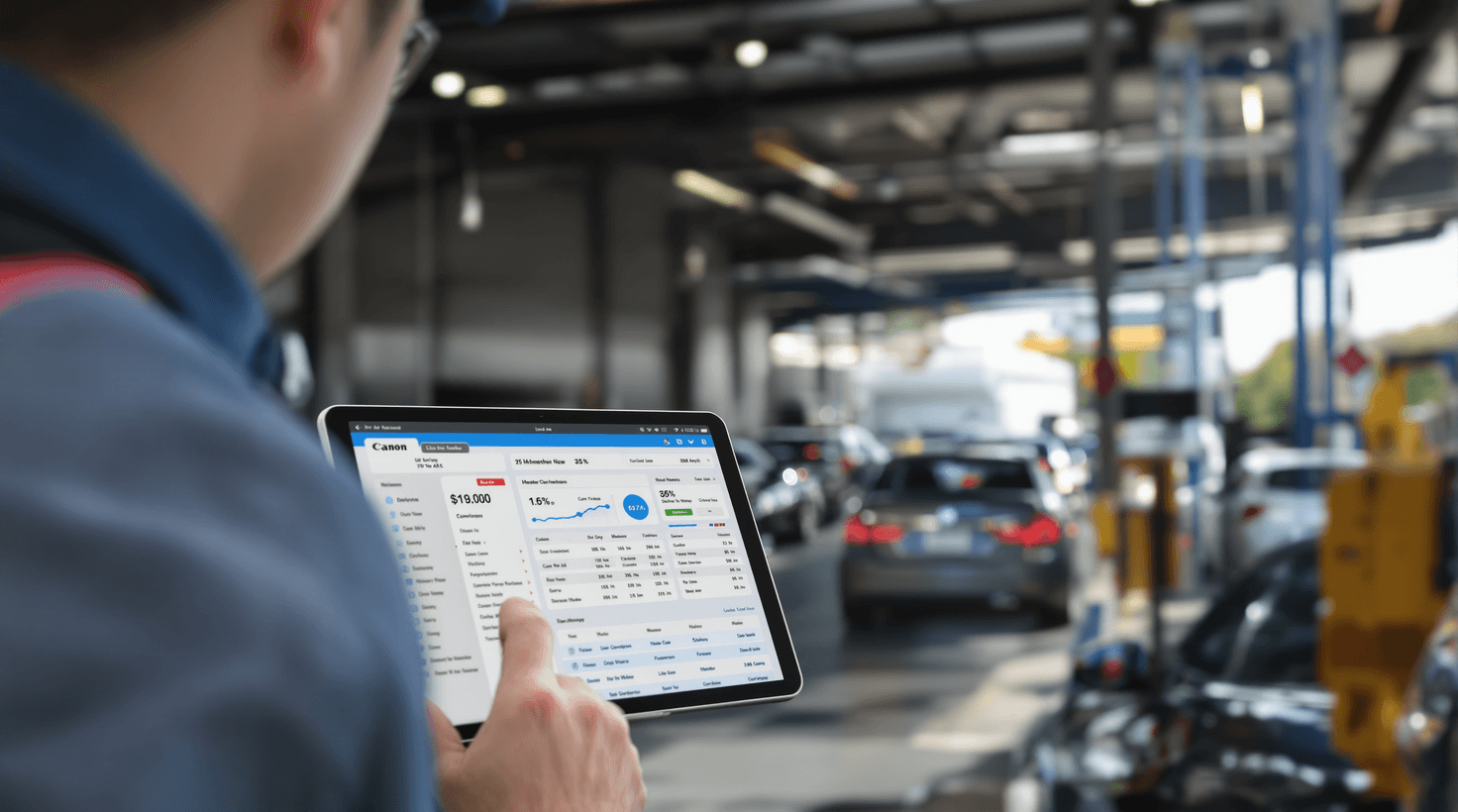
The modern express car wash is less a service business and more a subscription business with a tunnel attached. Your best customer isn't the person who drives through today — it's the member paying $30/month whether they wash twice or twelve times. That monthly recurring revenue is predictable, stackable, and the single metric that separates thriving independents from ones that get bought out by private equity for a fraction of what they'd be worth with a healthier membership base.
Here's the uncomfortable math: the average express tunnel with 500 members earns roughly $15,000/month in pure subscription revenue before a single retail wash. But industry data suggests member churn runs 6–10% monthly at operators without active retention programs — meaning you're replacing 30–50 members every month just to stay flat. The chains have automated this retention loop. Most independents haven't touched it.
That's the gap this guide closes. Not by adding staff or renegotiating chemical contracts, but by putting the right software in the right place in your operation.
TL;DR: Top 3 Recommendations
- Start today (free): Use ChatGPT/Claude to respond to every Google review and digitize your maintenance logs with MaintainX's free tier
- Month 2 ($70-$300/mo): Add Homebase Plus for weather-based staff scheduling and Birdeye for automated review requests
- Month 4 ($765+/mo): Deploy Rinsed for AI membership churn prevention — this is the single highest-ROI tool for express tunnel operators
The Economics That Actually Drive Your Decisions
Before touching any tool, understand what you're actually optimizing for. Car washes that run on unlimited membership plans operate on fundamentally different economics than retail-only operations.
| Metric | Retail-Only Wash | Membership-Driven Wash |
|---|---|---|
| Revenue predictability | Low (weather-dependent) | High (MRR floor) |
| Member penetration (% of revenue) | 0% | 45–65% at top performers |
| Average member LTV (24 months) | N/A | $480–$960 |
| Retail customer LTV | $40–$80 | $40–$80 |
| Monthly churn (no retention program) | N/A | 6–10% |
| Monthly churn (with active retention) | N/A | 2–4% |
| Cars/hour throughput target (express) | 80–120 | 80–120 |
The LTV gap is the story. A member who stays 24 months at $35/month is worth $840. A retail customer who comes twice a year is worth maybe $60. Every tool below maps to one of three levers: grow membership, retain membership, or move more cars through faster.
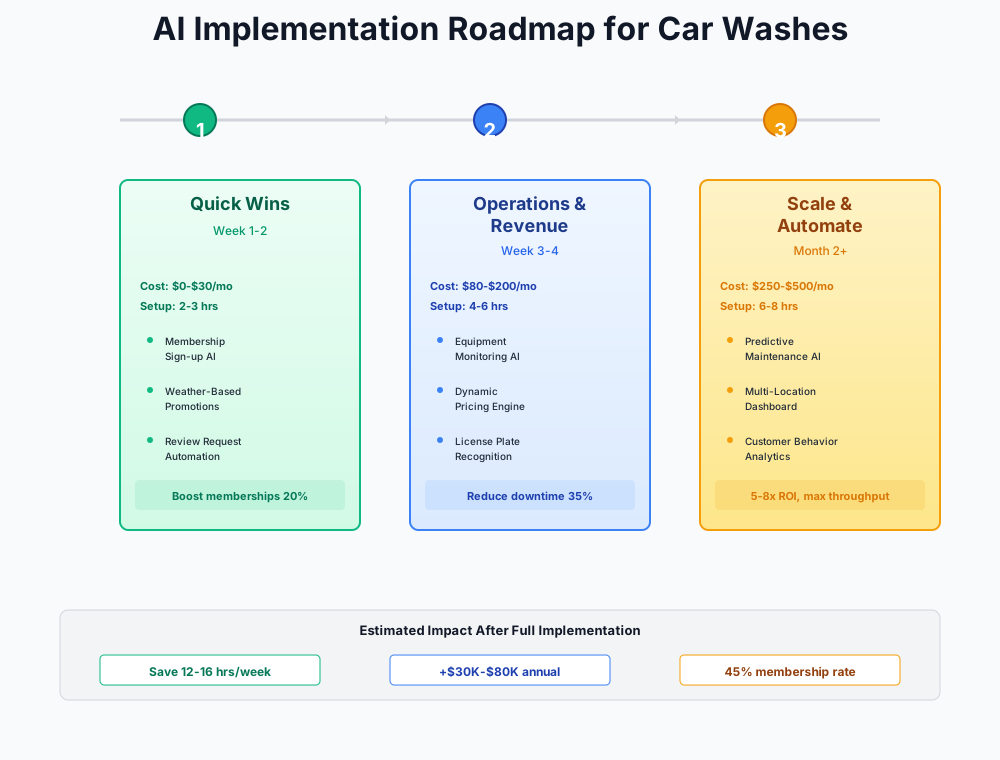
Here's a visual overview of the implementation approach:
Foundation: What You Can Set Up This Week for Free
These aren't placeholder steps while you evaluate bigger tools. For most operators, these free moves deliver more immediate ROI than anything else in this guide — because they fix the gaps that are bleeding revenue right now.
Your Google Reviews Are a Membership Sales Channel
Every unanswered 1-star review about a scratch claim costs you something you can't easily measure: the prospective member who read that review, scrolled past, and signed up at the Mister Car Wash down the street instead. National chains respond within hours. Not because they have faster managers — because they automated it.
You can match that cadence today, for free.
Use ChatGPT or Claude. Save one review-response prompt template on your phone. Set a daily 10-minute calendar reminder to check your Google Business Profile. Paste each new review in for a draft, adjust two words, and post it. The whole setup takes 30 minutes:
- Save a review-response prompt template on your phone
- Set a daily 10-minute calendar reminder to check your Google Business Profile
- Paste each new review into ChatGPT, review the draft, and post it
Write a professional response to this car wash Google review. Rules:
- If negative: be empathetic, don't argue, invite them to call us at [PHONE] to resolve it
- If it's a damage claim: mention we document every vehicle at entry and we'd love to review footage with them
- If positive: thank them genuinely, mention we'd love to see them again
- Never use the words "valued customer" or "we apologize for any inconvenience"
- Keep it under 75 words
Review: [PASTE REVIEW TEXT]
Then make the review ask systematic: print 50 cards with a QR code linking to your Google review page and hand one to every customer at exit. Five to ten new reviews per week compounds fast. Operators who make this a daily habit typically see their local search ranking shift within 60 days — translating to $500–$2,000/month in incremental traffic just from better map pack placement.
Stop Running Your Equipment on Memory and Instinct
Fewer than 10% of car washes use any digital system to track maintenance. Which sounds fine, until your main pump fails at 2 PM on a Saturday and nobody can answer: When was it last serviced? What parts were replaced? Was this the third time this quarter or the first?
That single afternoon of downtime at 100 cars/hour is $800–$2,500 in lost revenue depending on your market. CMMS data consistently reduces unplanned downtime 20–30%. For a busy express tunnel, that's $1,000–$3,000/month in failures you simply don't have.
MaintainX
Best for: Replacing paper maintenance logs at any car wash type
Mobile-first CMMS with unlimited work orders on the free tier. Add your conveyor, pumps, dispensers, and dryers as assets, create recurring PM checklists, and stick QR codes on every piece of equipment so staff can log issues from their phone. After 60 days of data, you'll know exactly which equipment fails most — and you'll have the records to hold vendors accountable.
Setup takes an hour or two:
- Download MaintainX and add your 5–8 most critical assets (conveyor motor, main pump, water reclaim system, chemical dispensers, dryers, pay stations)
- Create recurring preventive maintenance checklists — daily conveyor inspection, weekly pump check, monthly chemical calibration
- Print QR code stickers and apply them to each piece of equipment
- Assign your site manager and lead tech as users (free for up to 3)
- Non-negotiable rule: every equipment issue gets logged as a work order
Don't Skip the QR Codes
The QR stickers are what make this work. Without them, staff have to navigate an app to find the right asset. With them, they scan the code on the machine and log the issue in 30 seconds. That's the difference between adoption and abandonment.
Marketing and HR Copy That Actually Gets Done
Car wash owners know they should be running membership email campaigns, posting on social media, and writing better job postings. The honest reason it doesn't happen: who has 5–10 hours a month for that?
AI cuts this to a 30-minute monthly task. Save these templates in your phone's notes app and you'll never stare at a blank job posting again.
Write a 200-word email to our car wash members for the start of [SEASON]. Business name: [YOUR WASH NAME], located in [CITY]. Tone: friendly local business, not corporate. Include:
- A seasonal reason to wash now (spring salt removal / summer road trip prep / fall leaf protection / winter salt season)
- A mention of our [TIER NAME] membership upgrade at $[PRICE]/month
- A refer-a-friend offer: they get a free premium wash, their friend gets $5 off first month Keep paragraphs short. End with a clear call to action.
Write a 150-word job posting for a Car Wash Attendant at [WASH NAME] in [CITY].
Pay: $[X]/hour plus tips (average $[X]/day in tips).
Include: flexible scheduling, team environment, outdoor work in fresh air.
Tone: conversational and real — not corporate HR. Write it like a friend telling someone about a good gig.
Mention: we provide uniforms, free car washes for employees, and promote from within.
Must include the phrase "No experience needed — we train you."
Consistent seasonal campaigns and job posts are worth $500–$1,500/month in membership growth — not because AI writes magic copy, but because the marketing actually gets done.
The QuickBooks Features You're Already Paying For
85%+ of car wash operators use QuickBooks Online. Since mid-2025, Intuit has rolled out AI agents that auto-categorize transactions, reconcile bank feeds, and forecast cash flow — included in your existing subscription at no extra cost.
QuickBooks Online
Best for: Car wash operators already on QuickBooks who want to cut bookkeeping time in half
The new AI Accounting Agent auto-categorizes chemical supplier charges, equipment vendor invoices, and payroll transactions with context-aware precision. Cash Flow Planner predicts shortfalls 30-60-90 days out — critical for managing seasonal revenue swings. No additional cost if you already subscribe.
Activation takes about 30 minutes:
- Log into QuickBooks, go to Banking/Transactions, and enable auto-categorization
- Correct any miscategorized transactions for 2 weeks so the AI learns your patterns
- Turn on Cash Flow Planner under Reports — this is the most valuable feature for seasonal businesses
- Set up bank rules for recurring transactions (chemical suppliers, utility payments, membership billing deposits)
Most operators reclaim 3–5 hours of bookkeeping time per week and trim $200–$500/month off their bookkeeper bill.
ROI Snapshot
Monthly Cost
$0/mo
Time Saved
12hrs/week
Monthly Value
$4,920
ROI
Infinity%
Stopping the Two Biggest Revenue Leaks (Months 2–3)
Total investment: $170–$600/month. You've got digital maintenance data, consistent marketing, and faster bookkeeping. Now target the two specific places money exits a car wash operation every week: weather-blind scheduling and passive reputation management.
Match Your Labor Costs to Actual Volume
How many hours did you pay for last rainy Tuesday? How understaffed were you the Thursday after that storm when 200 cars came through? The imbalance — overstaffed on slow days, scrambling on surges — runs most operators 15–20% over their target labor cost percentage.
Homebase Plus is built for exactly this problem. At $70/month per location, its AI scheduling assistant factors in 7-day weather forecasts alongside your historical volume data to generate staffing recommendations automatically.
Homebase
Best for: Car washes with 4+ employees who need weather-based scheduling
The only scheduling platform that deeply integrates weather forecasting with labor optimization. The AI analyzes your past car count data, upcoming weather, and employee availability to generate a weekly schedule. Automated shift-fill notifications text available employees the moment someone calls out — solving the scramble that costs managers 3-5 hours/week.
Setup takes 2–3 hours:
- Sign up for Homebase (start with Free to test, then upgrade to Plus)
- Add all employees with availability, hourly rates, and scheduling preferences
- Connect to QuickBooks for automatic labor cost tracking
- Enter your rough daily car counts for the past month
- Set your target labor cost percentage (15–25% of revenue for express, 25–35% for full-service)
- Let the AI generate next week's schedule and enable shift-fill notifications
Expected impact: $800–$2,500/month from eliminating overstaffed slow days and ensuring full coverage during peak rushes. At $70/month, break-even is roughly one avoided overstaffed rainy afternoon.
Systematic Review Generation with Birdeye
The QR-card approach works, but it relies on staff remembering to hand out cards. The real step change is automated review request texts triggered after every completed wash — this is exactly how chains generate 50+ new reviews per month without thinking about it.
Birdeye
Best for: Multi-location operators who want automated reviews and competitor benchmarking
AI-powered reputation platform that automates post-wash review request texts, generates personalized AI responses to every review, and benchmarks your star rating against nearby competitors. The competitor benchmarking alone justifies the cost — knowing whether you're gaining or losing ground against the Zips or Mister Car Wash down the road.
Setup is 2–3 hours:
- Start with Birdeye's 30-day free trial
- Connect your Google Business Profile and Facebook Business page
- Configure automated review request texts — send 2 hours after a wash transaction
- Customize the message: "Thanks for visiting [Wash Name]! How was your wash? Leave us a quick review: [link]" — keep it under 160 characters
- Enable AI auto-response: auto-publish for 4–5 star reviews, flag negative ones for your personal attention
- Set up competitor benchmarking for 3–5 nearby car washes
How auto repair shops use reputation management to compete with dealership service centers parallels your situation almost exactly — see the auto repair shop guide for the same playbook applied to a different service vertical.
Automated review requests generate 3–5x more reviews than manual QR cards. Most operators see local ranking improvement within 60–90 days — translating to $1,000–$3,000/month in additional traffic.
AI Email and SMS Marketing with Klaviyo
Here's what's sitting untouched in your POS system right now: the phone numbers of every member who cancelled in the last 90 days. No win-back text went out at day 15. No upgrade prompt fired after their tenth wash. No welcome series helped them feel like a member rather than a transaction.
Klaviyo
Best for: Building automated membership marketing campaigns with AI-personalized send times
Klaviyo's free tier includes 250 contacts, 500 emails, and 150 SMS credits per month — enough to start three automated flows: a new-member welcome series, a membership upgrade prompt after the 10th wash, and a win-back campaign 15 and 30 days after cancellation. The K:AI agent can build complete campaigns from a text prompt.
One thing Klaviyo can't fix: missing contact data. Put a tablet or QR code at the pay station offering a free vacuum coupon for an email or phone number. Without that pipeline, no marketing tool moves the needle.
Three flows to build first:
- Welcome series — sent immediately, then 3 days, then 7 days after signup
- Upgrade prompt — sent to Basic members after their 10th wash
- Win-back — sent 15 and 30 days after a cancellation
Write 3 different win-back text messages (each under 160 characters) for car wash members who cancelled 30 days ago. Business: [WASH NAME] in [CITY] Offer: $10 off first month if they rejoin Three tones:
- Urgent/scarcity: mention limited-time offer
- Friendly/casual: miss-you tone
- Value-focused: remind them of the math (cost per wash vs. membership)
All three flows together typically recover $500–$2,000/month in memberships that would otherwise go uncontested.
ROI Snapshot
Monthly Cost
$370/mo
Time Saved
8hrs/week
Monthly Value
$5,280
ROI
1327%
Membership Retention and Throughput: The Tools That Separate Top Operators
Total investment: $500–$1,800/month. These tools only make sense once the foundation is solid. WashMetrix is useless without clean POS data. Rinsed is useless if fundamental wash quality is driving cancellations. Get the basics right first.
Rinsed: Built Specifically to Protect Your MRR
Failed credit card charges are the number one cause of membership cancellation — not bad washes, not price sensitivity, not competition. A card expires or gets reissued and nobody follows up. Each lost member represents $240–$600/year in recurring revenue. At scale, a 5% churn reduction adds $10,000–$50,000/year for a wash with 500+ members.
Rinsed
Best for: Express tunnel operators with 300+ active members
The industry's purpose-built membership CRM. AI-powered churn signal detection flags disengaging members before they cancel. Automated dunning sequences recover failed payments via text and email with easy card-update links. Downsell offers automatically present a lower-tier option at the point of cancellation — and members who accept downsell offers generate 4x more revenue than those who cancel outright. Integrates directly with DRB Washify, Mobileware, WashConnect, and SiteWatch.
Before you commit, run this math:
- Current monthly churn rate: (members lost this month / total members at start of month) x 100
- Revenue impact: average monthly membership price x members lost per month
- If the revenue impact exceeds $2,000/month, Rinsed likely pays for itself in month one
What it actually handles:
- Dunning sequences — text and email reminders when cards fail, with one-click update links
- Churn risk scoring — AI flags members showing disengagement patterns before they cancel
- Downsell offers — automatically presents a lower-tier option when a member initiates cancellation
- Win-back campaigns — automated outreach at 15, 30, and 60 days post-cancellation
For operators with fewer members or tighter budgets, Churnkey ($300/month) works with Stripe-based billing as a cancellation-interception tool. NXT Wash was the first car wash operator to deploy Churnkey's AI-powered "Cancel Flow" — the same technology SaaS companies have used for years, now adapted for memberships.
For a wash with 500 active members and 8% monthly churn, recovering half that churn covers Rinsed's cost three times over.
Real-Time Business Intelligence with WashMetrix
How many cars went through bay three last Tuesday versus last Tuesday four weeks ago? What's your cost per car today compared to your Q1 average? Which membership tier generates the most net margin after chemical costs?
If those questions take more than 30 seconds to answer, you're running your business slower than your competitors run theirs.
WashMetrix
Best for: Operators who want real-time KPI dashboards without Excel gymnastics
Purpose-built BI for car washes. Aggregates POS, membership, labor, and QuickBooks data into a single dashboard. AI-powered pacing module predicts end-of-period performance based on current trends. Automated anomaly detection flags unusual drops in revenue, throughput, or membership metrics. Now part of Sonny's Quivio ecosystem with direct POS integrations.
The 5 KPIs to put on your WashMetrix dashboard:
- Total cars washed (daily, weekly, monthly)
- Revenue split: retail vs. membership
- Cars per hour — your throughput efficiency metric
- Average revenue per car by wash package
- Labor cost as % of revenue
One habit that pays immediately: a 15-minute Monday morning numbers meeting with your site manager, reviewing the WashMetrix dashboard. Operators who do this consistently catch pricing and throughput problems 2–3 weeks earlier than they did with monthly statements. That faster feedback loop is where the real ROI lives, beyond the 3–5 hours saved on manual reporting.
AI Camera Systems for Damage Claims and Operations
Vehicle damage claims are the most stressful dispute in this business. Without pre-wash documentation, you're in "he said, she said" territory — and operators often pay $500–$2,000 per fraudulent claim just to avoid the argument.
Coram AI
Best for: Any car wash needing to document pre-wash vehicle condition for damage claim defense
AI-powered cameras with license plate recognition, vehicle make/model/color detection, and instant AI video search. Finding footage of a specific vehicle entering your wash takes seconds, not the hours of manual scrubbing required with traditional DVR systems. Cameras are provided free with the subscription — a major cost advantage if you're already due for a camera upgrade.
The claim protocol that works:
- Customer reports damage
- Thank them and pull up pre-wash entry footage by license plate (30 seconds with AI search)
- Review footage together showing the vehicle's pre-existing condition
- Document and resolve
For operations-focused analytics, Spot AI adds vehicle idle time tracking and throughput bottleneck detection on top of security — useful for express tunnel operators optimizing cars per hour.
Most operators cover the camera cost with the first two or three damage claims they defeat.
Predictive Maintenance: What MaintainX Becomes After 90 Days
Remember the free MaintainX setup from the first week? After 3–4 months of data, you've built the equipment history that makes predictive maintenance possible. Upgrading to Premium ($49/user/month, or $147/month for a 3-person team) unlocks AI analytics that tell you when equipment is likely to fail — before it actually does.
What the Premium tier adds:
- MTBF tracking — calculates average time between failures for each asset and alerts you when the predicted failure window approaches
- Cost-per-repair analysis — identifies equipment approaching the repair-vs-replace decision point
- Parts inventory with low-stock alerts — a $15 spare pump seal on-site can prevent a $3,000 downtime day
Running the free tier for 60+ days before upgrading ensures you're buying analytics that reflect your equipment's real failure patterns, not generic benchmarks. Operators who do this typically save $1,500–$4,000/month from failures they prevented rather than scrambled to fix.
ROI Snapshot
Monthly Cost
$1200/mo
Time Saved
12hrs/week
Monthly Value
$8,920
ROI
643%
A Few Things Worth Skipping
A $696/month recruiting platform makes sense for operators with 50+ employees. If you have fewer than 15 staff, Snagajob ($89/month) plus AI-written job postings covers your needs — and Team Engine isn't the answer.
Hold off on Rinsed until you cross 200 active members. At $765/month, the math doesn't close until your membership base is large enough that even a small churn reduction is meaningful revenue. Build volume with Klaviyo campaigns first.
Dynamic pricing tools like Superoperator are real and operators report 10–15% revenue increases from time-of-day and weather-based pricing — but the technology is still maturing in the US market. Watch this space for 2027.
Don't trust AI camera license plate recognition in low-light without proper entry illumination. LPR accuracy drops to 85–90% in winter conditions without adequate lighting. Budget for that upgrade alongside any camera installation.
Your First 30 Days
- Sign up for ChatGPT or Claude (free) and save 5 prompt templates for reviews, marketing, job postings, training, and competitor analysis
- Download MaintainX (free) and add your 5-8 most critical equipment assets with QR code stickers
- Activate QuickBooks AI features: auto-categorization, bank rules, and Cash Flow Planner
- Print 50 QR-code review cards and place them at the exit/pay station
- Set a daily 10-minute calendar reminder to respond to all Google reviews using AI drafts
- After 2 weeks: sign up for Homebase Free and start building your digital employee schedule
- After 30 days: evaluate whether Homebase Plus ($70/mo) makes sense based on your overstaffing/understaffing patterns
- After 30 days: start Birdeye's 30-day free trial for automated review requests
- After 60 days: review MaintainX data to identify your most failure-prone equipment
- After 90 days: calculate your membership churn rate and decide if Rinsed is justified
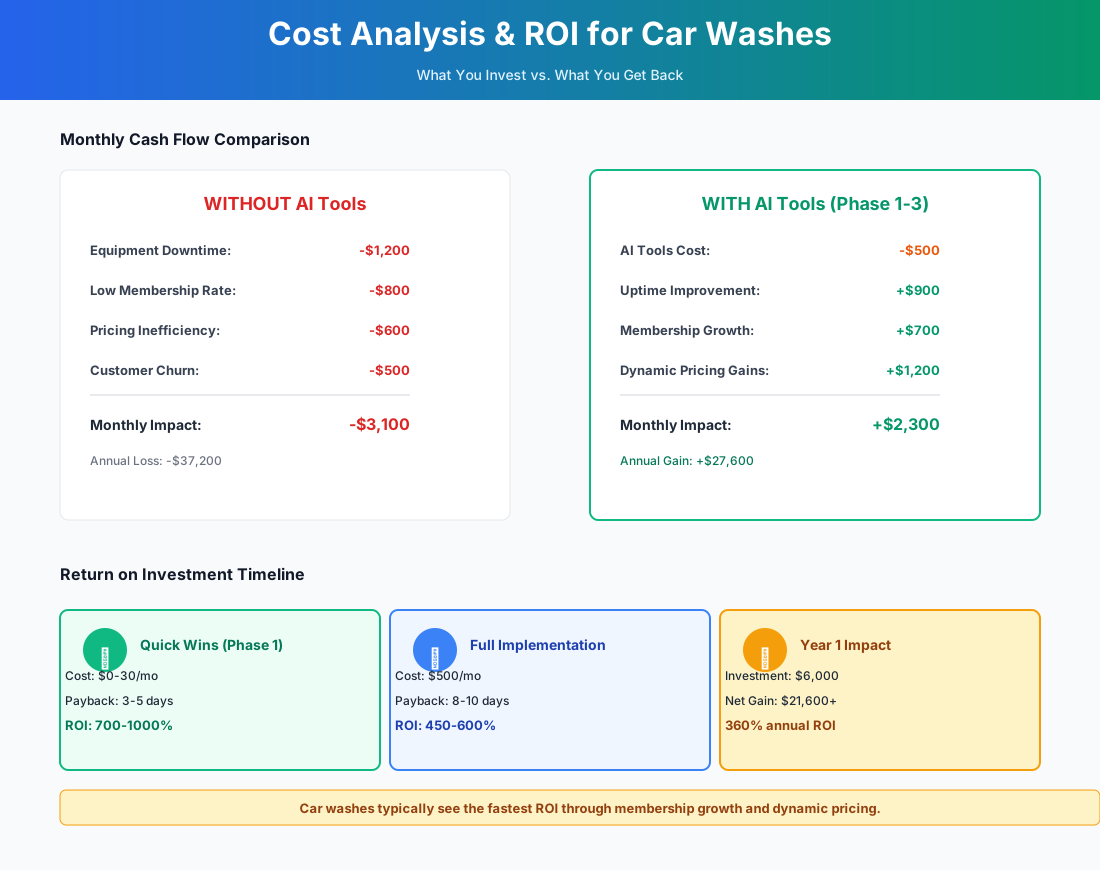
Here's a breakdown of the costs and expected returns:
Frequently Asked Questions
Can AI-powered LPR actually replace RFID tags for membership access?
For most operators, yes — and it's happening fast. ICS launched an AI-LPR upgrade in March 2025 claiming 99.9% plate recognition accuracy for existing WashConnect installations, with zero new camera hardware required. The winter caveat is real: dirty plates drop recognition rates to 85–90% in cold-weather states. Standard practice is LPR as primary with manual override (membership lookup by phone number) for the 5–10% of winter reads that fail. Every chain that's switched runs exactly this dual-system setup.
What membership penetration rate should I be targeting?
Top-performing independents typically run 45–65% of revenue from membership. If you're below 30%, your pricing, signage, or signup flow has friction worth investigating before you invest in retention tools — you're better off growing the base than optimizing churn on a small one. Operators in the 30–45% range are usually ready for Rinsed and Klaviyo. Below that, start with Klaviyo's free tier to build the signup and upgrade flows.
Does Homebase's weather scheduling account for the post-storm surge?
Partially. Homebase factors in 7-day forecasts and your historical volume, but it doesn't natively understand the car-wash-specific pattern where volume spikes 2–3 days after bad weather — when customers come to wash off salt and grime. The workaround: manually boost staffing recommendations 20–30% for the two days following any snow, ice, or heavy rain event. After one full winter season of data, the AI starts learning that pattern from your history. Operators in Snow Belt states report noticeably better post-storm predictions by year two.
How do you handle members sharing accounts across multiple vehicles?
Account sharing runs 3–8% of unlimited members, by most industry estimates. The smart move isn't to penalize it — configure a friendly text when an unregistered plate uses the membership, offering to add a second vehicle at a discounted family rate. You convert sharers into higher-revenue multi-vehicle plans instead of alienating paying customers. Rinsed can also flag anomalous usage patterns that suggest sharing, which gives you the data to make the offer proactively rather than reactively.
My reclaim system smells terrible in summer — is there an AI tool for water treatment?
No AI tool monitors reclaim water quality in real time yet (IoT sensors for pH and turbidity exist but cost $500–$2,000 to install and aren't mainstream). What AI can do is make the maintenance systematic. Create a recurring daily checklist in MaintainX: water clarity, odor level on a 1–5 scale, filter pressure readings, chemical treatment dosing. After 60–90 days of logs, you'll see that odor spikes correlate with specific conditions — high-volume days, filter age, ambient temperature. That turns a reactive nightmare into a predictable maintenance schedule. For California, Arizona, or Texas operators, consistent reclaim logging also provides documentation for environmental compliance audits.
Is Rinsed overkill for a single-location wash?
If you have 300+ active members, no. A wash with 400 members at $30/month at 8% churn is losing $960/month to attrition. Recovering half of that covers Rinsed's cost twice over. Below 200 members, the math gets thin — start with Klaviyo win-back flows ($0–$45/month) and revisit Rinsed once you've grown the base.
Running a med spa or other high-ticket membership business alongside your wash? Our med spa guide covers the member retention and automated marketing side for service businesses with similar recurring-revenue dynamics.
The independent car wash business isn't getting easier. Private equity consolidation, rising chemical and water costs, a labor market that offers your applicants climate-controlled warehouses — none of that changes overnight.
What changes: you stop running blind. The free tools in the first section take an afternoon. The investments in the second section pay for themselves inside 30 days. The tools in the third section put the same membership CRM, analytics, and camera infrastructure under your roof that Mister Car Wash spent millions deploying at scale.
Start with the checklist. Respond to every Google review this week. Stick QR codes on your equipment. Those two habits alone put you ahead of 80% of independents — and once they're running, the rest is just adding layers.
More AI Implementation Guides
AI Tools for Tire Shops: Complete 2026 Owner's Playbook
The best AI tools for tire shops in 2026 — capture after-hours leads, raise your service attachment rate, and recall customers before they buy at Discount Tire.
AI for Auto Parts Selling: Pricing & Personalization
AI in auto parts selling: personalized suggestions, fitment matching, real-time pricing automation & B2B ordering. Save 15+ hrs/week. See picks & pricing.
AI Tools for Auto Repair Shops: Calls, Quotes & DVI
Best AI tools for auto repair shops in 2026: capture missed calls, automate digital inspections, and speed up estimates. Real pricing and setup steps inside.
Best Mobile Detailing CRM & Car Detailing Software
Compare the best mobile detailing CRM & auto detailing software — all-in-one booking, automated reviews, 30-50% fewer no-shows. See pricing & setup steps.
AI Tools for Bookkeeping Services: 2026 Guide
Best AI tools for bookkeeping services in 2026: Automate categorization, reconciliation, and document chasing without hiring extra staff.
AI Tools for Marketing Agencies: 2026 Playbook
The best AI tools for marketing agencies in 2026. A phased plan to kill Hell Week reporting, scale content, and fix billable utilization without new hires.
Keep exploring
See every AI implementation guide we've published for Trades & Contractors, or browse the full library by industry or category. Looking for a specific platform? The AI tools directory indexes every product mentioned across our guides, and the comparisons hub puts the most-asked head-to-heads side by side.