Most laundromat owners don't work in the store full-time. They have a day job, a second location, or a spouse keeping the household running while the store hums along with a part-time attendant. The appeal of the business — and the trap — is that it's designed to run without you. Until it doesn't.
The jammed coin mechanism on machine 11. The attendant who no-showed at 7 AM. The five voicemails asking if wash-and-fold orders are ready. These interruptions find you no matter where you are, and you can't scale a semi-absentee model if every exception requires your attention.
This guide is built around a specific thesis: a well-run laundromat in 2026 has three levers that AI moves better than anything else. First, remote monitoring — knowing exactly what every machine is doing without being there. Second, loyalty and repeat visits — your self-service customer who comes in three times a week is worth more than ten one-time visitors, and an app-based loyalty program is the only way to keep score. Third, wash-and-fold margin — at $1.50–$1.75/lb versus $0.35–$0.50/lb for self-service, drop-off service runs at 2–3x the margin per pound, and it's where AI-assisted communication pays back fastest.
Run all three levers well and the 29,500 U.S. laundromats that still operate purely on coin and clipboard become your competition, not your benchmark.
TL;DR — Top 3 Recommendations
- Start free today: Use ChatGPT or Claude to write Google review responses, social media posts, attendant training guides, and SMS campaigns (saves 4-6 hrs/week, costs $0)
- Add cashless payments in Month 2: PayRange BluKey readers increase machine revenue 20-30% and eliminate coin collection entirely
- Deploy an AI receptionist by Month 3: Cents Assist handles 80-100% of inbound calls and texts for $99/mo — no more "is my order ready?" interruptions
The Laundromat Economics That Actually Matter
Before picking tools, it helps to know which numbers are movable. Here's a breakdown that most guides skip — the relationship between service mix, machine utilization, and margin:
| Revenue Stream | Typical Rate | Margin | Notes |
|---|---|---|---|
| Self-service (washer) | $2.75–$4.50/cycle | ~40–50% | Utility-heavy; turns per day is the key metric |
| Self-service (dryer) | $0.25–$0.35/10 min | ~55–65% | Often underpriced relative to washers |
| Wash-and-fold (in-store) | $1.50–$1.75/lb | ~55–65% | Labor adds ~$0.40–$0.55/lb at full cost |
| Pickup and delivery | $2.00–$3.00/lb | ~45–55% | Route efficiency determines actual margin |
| Commercial accounts | $0.85–$1.20/lb | ~50–60% | High volume, low churn, negotiated rates |
The industry benchmark for a busy self-service machine is 5–7 turns per day on a washer. Most unmonitored locations run 3–4. That gap — roughly 1.5–2 unused cycles per machine per day — is the single largest recoverable opportunity in the business. IoT monitoring doesn't create demand; it shows you exactly where demand exists and machines aren't capturing it.
Wash-and-fold margin runs higher than self-service margin on a per-pound basis, but only if attendant labor is controlled. An AI receptionist handling order status inquiries doesn't just save interruptions — it removes the 15-minute-per-call labor drag that collapses W&F profitability at scale.
If you run a car wash or cleaning service, you'll recognize the same dynamic: equipment utilization and labor efficiency are the only two dials that matter once you've set your price.
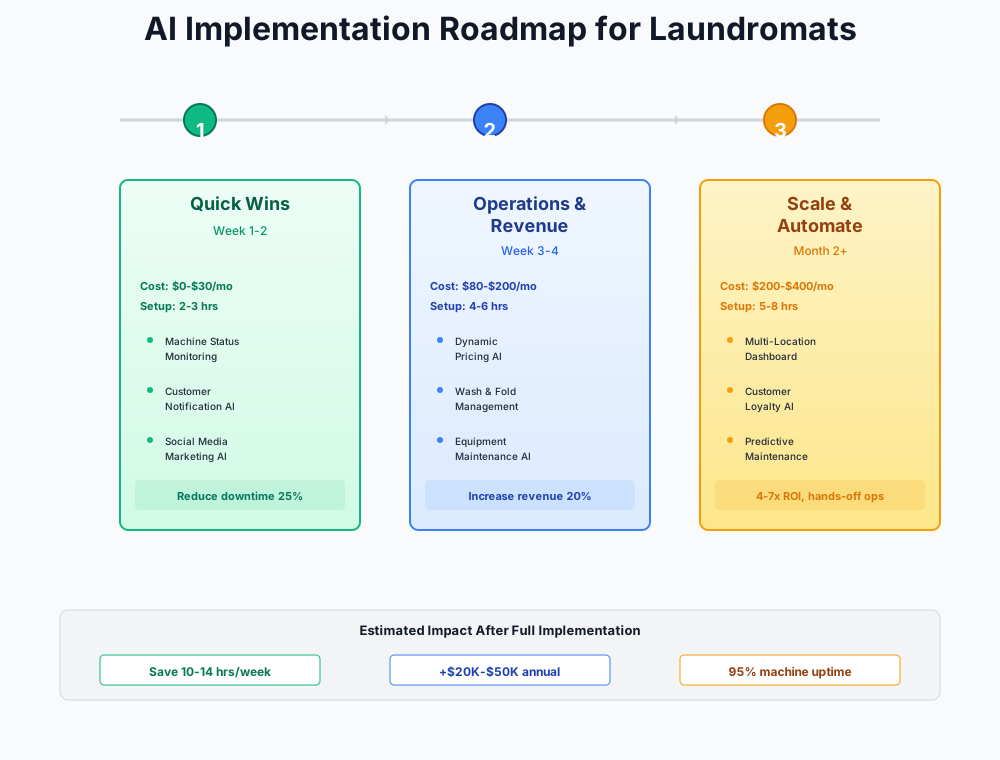
Here's a visual overview of the implementation approach:
Foundation: Free AI Tools That Work This Weekend
Setup time: 3-5 hours total | Monthly cost: $0-$45 | Time saved: 8-12 hours/week
These are the tools you implement before you spend a dollar.
Your On-Demand Business Assistant
Open ChatGPT or Claude right now. Paste this prompt.
I own a laundromat called [Your Name] in [City]. A customer left this 1-star review: "[paste the review text here]". Write a professional, empathetic response that acknowledges their frustration, apologizes without admitting liability, offers to make it right, and invites them to contact me directly at [phone/email]. Keep it under 100 words. Don't sound defensive or robotic.
That's the highest-ROI first use of AI for any laundromat. A professional reply to a negative review takes 15–20 minutes to write well. The AI drafts one in 30 seconds that's genuinely better than what most owners produce when they're annoyed at 10 PM.
From there, batch your marketing for the month in a single 60-minute session:
Create a 4-week Instagram and Facebook content calendar for my laundromat called [Name] in [City]. Include 3 posts per week mixing: practical laundry tips for customers, promotions for our wash-and-fold service ($1.75/lb, 24-hour turnaround), local community shout-outs, and behind-the-scenes photos of our clean modern machines. Write the captions and suggest what type of photo to use for each post. Keep captions under 150 words with relevant hashtags.
Then write the training document that's been on the to-do list for two years:
Create a one-page onboarding guide for a new laundromat attendant at [Name]. Cover: (1) opening checklist including unlocking, turning on lights, checking machines, and refilling detergent vending, (2) how to process a wash-and-fold order from drop-off to pick-up notification including weighing the bag, writing the tag, sorting by color/fabric, selecting wash settings, and explaining turnaround time to the customer, (3) how to handle a customer complaint about a garment issue, (4) what to do when a machine shows an error code including which codes to try resetting vs. which to report immediately, (5) closing checklist. Write it simply enough for a first-day employee.
Realistically: 4–6 hours/week back across review responses, marketing content, job postings, and training materials. Cost: $0.
Free Scheduling That Ends the 6 AM Texts
Stop managing attendant schedules via text thread. Homebase's free Basic plan covers scheduling, time tracking, and team messaging for up to 10 employees — which covers most laundromats entirely.
Homebase
Best for: Laundromats with 1-10 part-time attendants
Free scheduling, time clock, and team messaging app. Employees can swap shifts through the app instead of calling you at 6 AM. The single most valuable feature for laundromat owners is shift swap — it lets your attendants solve coverage problems themselves without involving you.
Setup takes under 30 minutes: create your location, add operating hours, add each employee with their availability, build the first weekly schedule in the drag-and-drop builder, then have attendants download the app during their next shift. Enable automated shift reminders and the swap feature before you leave.
Most owners save 2–3 hours a week just from moving off text threads. Fewer last-minute scrambles means $300–$800/month in shifts that actually get covered instead of frantic calls.
Review Volume Is a Local SEO Moat
New stores open with zero reviews. Yours might have 40. The path to 200 — which is where you start dominating local search results in competitive markets — runs through automated SMS requests sent after wash-and-fold pickup. That sequence converts at 10–15%, which means 10–15 new reviews for every 100 orders fulfilled.
Emitrr
Best for: Review requests + missed call text-back
Sends automated review request texts after service completion, plus automatically texts back customers when you miss a call. The missed-call text-back alone captures orders you'd otherwise lose — a customer who calls at 9 PM and gets no response goes to a competitor.
EZTexting
Best for: Budget SMS marketing and order-ready alerts
Simple, affordable SMS platform for order-ready notifications, promotions, and review requests. SMS open rates hit 98% vs. 20% for email — your customers will actually read these.
Run either consistently and you'll add 10–20 new Google reviews per month. Service businesses typically see 15–25% more new customer inquiries after crossing 100 reviews — that's $500–$2,000/month from a $20–$42 investment.
One Hour a Month on Social Media
Take the content calendar ChatGPT created and schedule it all in one sitting using Later. Spend 60–90 minutes once per month; your social channels post themselves after that.
Later
Best for: Batch-scheduling Instagram, Facebook, and Google Business Profile posts
AI-powered best-time-to-post recommendations and auto-publish to all your social channels. The Google Business Profile integration is especially valuable — GBP posts improve your local search ranking directly.
One note on content: use real photos from your store. A shot of neatly folded towels on your counter outperforms a generic laundry stock photo by 3–5x in engagement. Customers want to see your specific store.
ROI Snapshot
Monthly Cost
$45/mo
Time Saved
10hrs/week
Monthly Value
$2,700
ROI
5900%
Revenue Growth: Tools That Pay Back in 30 Days
Setup time: 6-10 hours | Monthly cost: $150-$400 | Time saved: 8-15 hours/week
With your daily time-wasters handled, the next layer directly grows revenue.
Cashless Payment: The Single Best Laundromat ROI
Here's what the data actually shows: cashless machines generate roughly 30% more revenue per machine than coin-only machines, primarily because customers aren't constrained by how many quarters they brought. Add in the 5–15% of cash revenue that disappears to theft and miscounting, plus 3–5 hours/week of coin collection and bank runs, and the payback period on cashless hardware is typically 60–90 days.
PayRange
Best for: Retrofitting existing machines with Bluetooth mobile payments
Bluetooth-enabled hardware readers that retrofit onto existing coin machines without wiring. Claims 3.5x lower total cost than traditional card readers. 8 million users, 500,000+ machines deployed. Includes machine learning for predictive issue detection and real-time revenue analytics.
Nayax
Best for: Traditional tap-to-pay card readers with analytics dashboard
Industry-standard cashless payment terminals with built-in analytics. Machine-level revenue reporting, real-time transaction monitoring, and automated weekly bank deposits. If your customers prefer tapping a card over downloading an app, Nayax is the better fit.
Start with your 4–6 highest-traffic machines — the ones where the quarter slot jams most often. Keep coin active alongside cashless for at least 6 months during transition. Post clear signage with QR codes explaining how to pay. After 30 days, check the analytics dashboard and compare per-machine revenue. If it's up (expect +20–30%), roll out to remaining machines.
The Wash-and-Fold Communication Problem
Your attendant stops folding every time the phone rings. Customers don't know when orders are ready. After-hours callers hit voicemail — and then call the store down the street. The revenue leak isn't just the missed call; it's the next 12 orders that customer would have placed.
Cents Assist
Best for: AI phone + text receptionist built specifically for laundromats
The only AI receptionist purpose-built for the laundry industry. Handles 80-100% of inbound calls and texts — takes wash-and-fold orders by phone, provides real-time order status, answers FAQs in multiple languages, and escalates to humans only when needed. Includes call transcriptions and analytics. If you're already on Cents, adding this is a no-brainer.
Picture it: a customer calls at 9:30 PM asking if her order is ready. Instead of voicemail, the AI checks the order system and texts back: "Hi Maria, your order is ready for pickup — we're open until 10 PM or you can grab it tomorrow starting at 7 AM." That order stays with you. That customer books her next drop-off via the same text thread.
If you're not on the Cents platform, Emitrr ($42/month) provides missed-call text-back and automated SMS responses as a solid middle ground.
Inbound call volume typically drops 40–60% within two weeks of deployment. The attendant throughput gain alone justifies the cost on any store processing 30+ W&F orders per week.
Pickup and Delivery Done Profitably
PUD customers pay $2.00–$3.00/lb. They have 3–5x the lifetime value of a self-service customer and churn at much lower rates. The problem isn't demand — it's that manual routing wastes 30–40% of driver time, which collapses the margin that makes PUD worth running.
Routific
Best for: AI route optimization with customer tracking notifications
Calculates up to 40% shorter routes than manual planning. Automated customer notification with live tracking links on Essential plan and above. Proof-of-delivery capture. 7-day free trial — import your stops and see the optimized route instantly.
OptimoRoute
Best for: Recurring weekly delivery schedules at lower cost
Best value for laundromats with predictable recurring routes. Weekly planning mode pre-builds delivery schedules. Real-time tracking with customer ETAs. 30-day free trial — the longest in the category.
If you're launching PUD for the first time, keep the radius to 5 miles, set a $25–$35 minimum order, and start with yourself or an existing attendant doing 2–3 runs per week. Text your existing W&F customers first — they already trust you with their clothes. Expect 5–15 orders/week in month one, growing to 20–40 with consistent outreach. Each new PUD customer is worth $100–$300/month in recurring revenue.
If you also manage a storage facility, the same route optimization tools coordinate between locations without adding complexity.
Bookkeeping Across Multiple Revenue Streams
A laundromat running self-service, W&F, delivery, vending, and commercial accounts has five revenue streams that need to stay separated for tax purposes and business decisions. Manual reconciliation across different payment systems is where errors compound quietly.
QuickBooks Online
Best for: AI transaction categorization and anomaly detection for multi-stream revenue
Intuit Assist (built-in AI) categorizes transactions at 90%+ accuracy, flags unusual patterns, and follows up on unpaid invoices automatically. Set up laundromat-specific revenue categories — Self-Service, Wash-and-Fold, Pickup/Delivery, Vending, Commercial Accounts — and the AI learns your business within weeks.
The setup step that matters most: separate utility expenses into Water, Gas, and Electric as distinct categories. When your utility bill spikes $500, you need to know whether it's a water leak (maintenance issue) or a gas rate increase (negotiation issue). QuickBooks' anomaly detection flags these automatically once your categories are clean.
Here are my laundromat's monthly water, gas, and electric bills for the past 12 months: [paste data]. My store is open 7am-10pm daily with 20 washers and 20 dryers. Peak hours are 10am-2pm and 5pm-8pm. Analyze these numbers and tell me: (1) which months show unusual consumption spikes, (2) estimated usage per machine per day, (3) whether my costs are in line with industry averages of 20-25% of gross revenue, and (4) specific questions I should ask my utility company or equipment technician about reducing consumption.
ROI Snapshot
Monthly Cost
$300/mo
Time Saved
14hrs/week
Monthly Value
$5,680
ROI
1793%
Competitive Advantage: Remote Operations and Loyalty
Setup time: 8-15 hours | Monthly cost: $300-$900 | Time saved: Additional 5-8 hours/week
This is where semi-absentee ownership stops being reactive and starts being by design.
IoT Machine Monitoring: Know Before It Breaks
A broken washer during Saturday peak hours costs $200–$800 in lost revenue. The industry average of 3–5 unplanned breakdowns per month adds up to $1,000–$4,000 in preventable losses — before you count the labor cost of emergency service rates. IoT monitoring changes this from a reactive problem to a scheduled one.
Cents Connect
Best for: Cross-brand machine monitoring with revenue analytics
Works with Speed Queen, Dexter, Maytag Commercial, and Nayax. Real-time machine availability dashboard, revenue-per-machine analytics, and predictive maintenance alerts based on usage thresholds and error code patterns. Customer-facing machine availability display reduces "are machines open?" calls.
Speed Queen Insights
Best for: Owners with Speed Queen equipment who want built-in monitoring
Built into newer Speed Queen commercial lines. Remote machine programming lets you adjust cycle times, water temperatures, and vend prices from your phone — no driving to the store to change a price. Energy consumption monitoring identifies inefficient machines costing you utility dollars.
Cents Connect operators report catching recurring machine issues 2–3 days before full failure. Instead of a $400 emergency service call on Saturday plus $800 in lost revenue, you schedule a $200 routine repair on Tuesday morning. One incident per month justifies the $75 subscription entirely.
The monitoring data goes further than maintenance. Connected machines show revenue per machine, utilization by hour, and which machines customers quietly avoid. Low revenue on a specific unit almost always means an unreported issue, not slow traffic. Should you raise prices on your premium front-loaders? Are Tuesday afternoons actually dead, or does it just feel that way? The data answers these questions with specifics you didn't have before.
AI Security Cameras for Remote Visibility
Semi-absentee owners drive to the store 1–3 times per day just to verify the attendant showed up, machines are running, and nothing's been vandalized. AI cameras replace those trips with a 30-second phone check.
Arlo Pro
Best for: Single-location stores wanting easy wire-free installation
AI-powered person detection eliminates false alerts from shadows and cars. Activity zones for monitoring the cash register, machine floor, and entrance separately. Wire-free installation — no electrician needed. Two-way audio lets you communicate with customers or staff remotely.
For multi-location operations, Rhombus ($548/camera + $149–$649/year for AI features) adds people counting, occupancy analytics, and local storage that keeps recording during internet outages — relevant for laundromats with inconsistent connectivity.
Biometric Privacy Laws
Skip facial recognition features. Illinois (BIPA), California (CCPA), Texas, and Washington have biometric privacy laws that could expose you to lawsuits. Standard person detection and anomaly alerting are legally safe and nearly as useful for loss prevention.
All-in-One Platform: When Consolidation Makes Sense
By this point, you might be running 5–8 separate tools. If that's creating platform fatigue, run the numbers on consolidation before defaulting to staying fragmented.
Cents
Best for: All-in-one: POS + machine monitoring + AI receptionist + delivery dispatch + marketing
The most widely adopted laundry management platform in the U.S. Full stack replaces your POS, machine monitoring, delivery routing, AI receptionist, and marketing automation in a single dashboard. Processes $1 billion+ in payments annually. Hardware investment: $2,000-$3,500 one-time.
CleanCloud
Best for: DoorDash/Uber delivery integration without managing your own drivers
POS with built-in order tracking, barcode assembly workflow (reduces garment mix-ups), and native DoorDash/Uber Direct integration for delivery without your own fleet. AI chatbot handles website customer questions 24/7. Lower cost entry point than Cents.
The math is simple: add up what you're paying for separate tools (POS + SMS + routing + monitoring + marketing). If it's over $350–$400/month, the Cents full stack at $498 may save you money while adding capabilities you didn't have. Under $250/month? CleanCloud at $99–$179 gives you 80% of the functionality at a price that preserves margin.
I run a laundromat called [Name] in [City] and I want to pitch wash-and-fold commercial laundry services to a local hotel with [X] rooms. Write a one-page business proposal including: our 24-hour turnaround guarantee, pickup-and-delivery included, pricing ($[X] per pound for linens, $[Y] per pound for towels), quality guarantee with re-wash policy, and getting started process. Emphasize reliability, cost savings vs. their in-house laundry operation, and the fact that we handle the labor so their housekeeping staff can focus on room turnover.
Four Mistakes Worth Avoiding
Onfleet is overkill. At $599/month minimum, it's built for logistics operations running 5+ drivers and 50+ stops per day. Routific at $49/vehicle/month delivers 90% of the functionality at 8% of the cost for any laundromat doing PUD.
Hold off on dynamic surge pricing. Cents Connect makes it technically possible to charge more on Saturday mornings, but this is still in early pilot stage. Customers used to a $3.50 wash will react badly to seeing $4.50 on a peak day. Wait for industry normalization before experimenting.
Don't sign a 12-month platform contract without a full 30-day trial. Some operators discover mid-contract that the platform doesn't integrate with their machine brand, or attendants can't adapt to the new POS workflow. Month-to-month is worth the 10–20% premium until you're confident.
Don't automate complaint responses. AI handles routine status inquiries and FAQs well. An angry customer who gets a clearly automated reply when they're reporting a damaged garment will escalate immediately. Configure your AI tools to recognize complaint keywords and route to a human every time.
Coin Vault to Cloud: Your Migration Checklist
- Create free ChatGPT or Claude account — respond to your 3 oldest unanswered Google reviews today
- Sign up for Homebase free plan — build next week's schedule in the app instead of via text
- Set up Emitrr ($42/mo) or EZTexting ($20/mo) — configure automated review request texts for wash-and-fold customers
- Generate a 4-week social media calendar with ChatGPT — schedule it in Later ($25/mo) or free Meta Business Suite
- Request a PayRange or Nayax quote — plan cashless reader installation on your 4-6 busiest machines
- If on Cents platform: add Cents Assist AI receptionist ($99/mo) — if not, configure Emitrr missed-call text-back
- Define your PUD delivery zone (5-mile radius) — sign up for Routific or OptimoRoute free trial
- Set up QuickBooks with laundromat-specific revenue and expense categories — activate Intuit Assist AI
- Contact Cents or your machine manufacturer about IoT monitoring compatibility for your equipment
- Audit your security cameras — evaluate Arlo Pro for single-location or Rhombus for multi-location AI upgrade
- Calculate total separate-tool spend vs. Cents or CleanCloud all-in-one platform pricing
- Track your baseline metrics: owner hours/week, Google reviews, revenue per machine, unplanned breakdowns per month
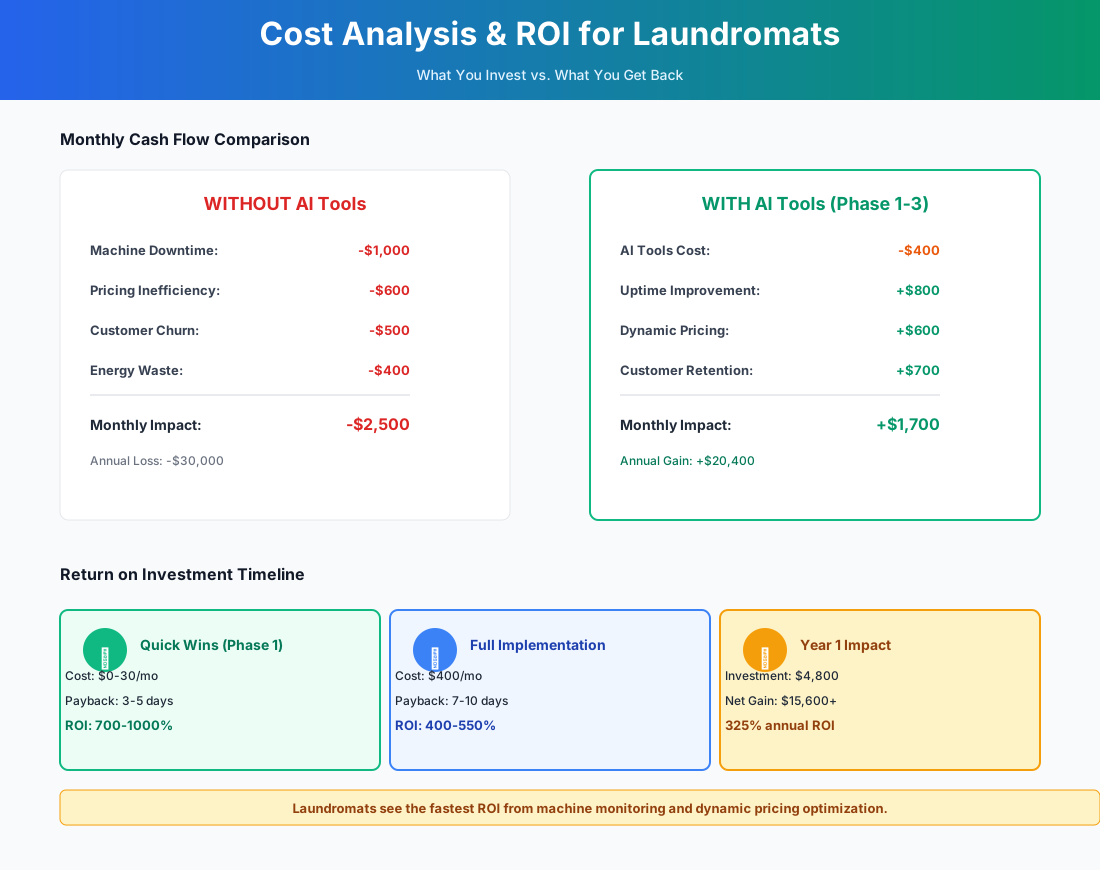
Here's a breakdown of the costs and expected returns:
FAQ: AI for Laundromats
Does cashless payment actually work in laundromats that serve primarily lower-income neighborhoods?
Yes. Smartphone ownership in the U.S. is 92% across all income levels, and PayRange reports 8 million users specifically in laundromat demographics. That said, never remove coin payment entirely — always run both options in parallel. The customers who switch to cashless will spend 20–30% more per visit because they're not limited to the quarters they brought. The customers who prefer coins keep using coins. You win either way.
What happens to Cents Assist when my internet goes down mid-shift?
Cents Assist processes through the cloud, so an outage means the AI stops handling inquiries until connectivity returns — calls fall back to voicemail or your personal phone. If your internet is unreliable, pair it with Emitrr's missed-call text-back: Emitrr runs on cellular SMS and keeps working through internet outages, so customers always get some kind of response.
Can AI route optimization account for laundry bag weight limits and vehicle capacity?
Yes — both Routific and OptimoRoute support vehicle capacity constraints. Set a maximum weight or bag count per route so the system doesn't load your driver's sedan with 400 lbs of laundry. Routific lets you define capacity by weight, volume, or custom units. Set your vehicle limit to 80% of actual max to leave buffer for oversized orders.
How do I handle sales tax on wash-and-fold vs. self-service when my POS and bookkeeping are on different platforms?
This varies by state — some states exempt self-service laundry but tax wash-and-fold as a service, others tax both or neither. QuickBooks lets you set different tax rules per revenue category, so configure Self-Service Revenue as exempt and Wash-and-Fold Revenue as taxable (or whatever your state requires). If you're on Cents or CleanCloud, their POS applies tax at point of sale — but verify the settings match your state rules during setup, because the defaults may be wrong for your jurisdiction. Your accountant earns their fee on this one.
My IoT monitoring data shows machine 7 is generating 40% less revenue than comparable machines. What does that usually mean?
Almost always one of three things: an unreported mechanical issue customers have learned to avoid, a coin slot that's intermittently jamming so cashless-only customers can't start it, or a location in the store with poor lighting or proximity to a door that makes it feel less appealing. Pull the error code log first. If the machine looks mechanically clean, stand next to it for 20 minutes on a busy Saturday afternoon and watch what customers do. The behavioral data usually makes it obvious.
My competitor just opened a brand-new store two blocks away. Which investments matter most right now?
Google reviews and cashless payments — in that order. A new store has zero reviews and zero local SEO presence. That's your advantage if you move quickly. Get to 100+ reviews with automated requests (4–6 months at 10–20 reviews/month) and you'll outrank them in local search for years. Add cashless so you match their convenience on day one. Then differentiate on wash-and-fold and PUD services they may not have launched yet. New equipment loses its advantage within 3 years. Customer relationships and review count compound indefinitely.
The tools in this guide aren't a technology project — they're a shift from a store that needs you there to one that tells you what's happening from wherever you are. The monitoring dashboard that shows you machine 11 is running hot at 11 PM. The AI that handled 23 inbound calls while your attendant processed 8 W&F orders. The routing app that got your driver through 14 stops in 3 hours instead of 5.
None of that requires you to be a tech operator. It requires you to start with the free tools, prove the returns, and build up from there. The laundromats that are pulling ahead in 2026 aren't the ones with the newest equipment — they're the ones that stopped running on quarters and intuition.
More AI Implementation Guides
AI Tools for Breweries: The 2026 Owner's Playbook
The best AI tools for breweries in 2026: cut TTB compliance time, tighten COGS, streamline taproom scheduling, and target release marketing — starting free.
AI Tools for Bookkeeping Services: 2026 Guide
Best AI tools for bookkeeping services in 2026: Automate categorization, reconciliation, and document chasing without hiring extra staff.
AI Tools for Marketing Agencies: 2026 Playbook
The best AI tools for marketing agencies in 2026. A phased plan to kill Hell Week reporting, scale content, and fix billable utilization without new hires.
AI Tools for Home Health Care Agencies: 2026 Guide
A practical 2026 guide to AI tools for home health care agencies — HIPAA-safe automation for shift-filling, OASIS-E documentation, EVV, and claim denials.
AI Tools for Dermatology Practices: 2026 Guide
The best AI tools for dermatology practices in 2026 — cut prior-auth hours, reduce no-shows, and grow your cosmetic line, with a HIPAA-first rollout plan.
AI Meeting Assistant Cost for Accountants in 2026
What does an AI meeting assistant cost for an accounting firm? Free tiers, per-seat pricing from ~$17/user/mo, and the real total for a 3-, 5-, and 10-person team, compared.
Keep exploring
See every AI implementation guide we've published for Retail, or browse the full library by industry or category. Looking for a specific platform? The AI tools directory indexes every product mentioned across our guides, and the comparisons hub puts the most-asked head-to-heads side by side.