
A parent signs up their eight-year-old for your intro trial. The kid loves it. They start as a white belt in September. If you do everything right — keep them engaged, celebrate promotions, communicate with the parents — that student is still on the mat three, four, five years later. By the time they test for brown belt they've paid you $8,000–$12,000 in tuition. Their younger sibling has joined. Their parents refer two other families.
That is the martial arts school business model. Not the trial class. Not the Instagram followers. The multi-year student lifecycle — and every tool decision you make should serve it.
Most martial arts school software advice treats dojos like gyms: focus on new member acquisition, minimize churn. But a gym sells access to equipment. A dojo sells a progression journey. The economics are completely different. A gym member who cancels after four months cost you some acquisition spend. A white belt who quits before yellow belt cost you the next five years of recurring tuition — plus the referrals they never gave you, and the siblings who never enrolled.
This guide is built around that reality. The three highest-leverage things AI and automation can do for a martial arts school are: (1) convert more intro trials into enrolled students before the enthusiasm of that first class fades, (2) catch students who are drifting away before they officially quit, and (3) handle all the billing and admin that pulls you off the mat and onto your phone.
The tools that do this are mostly under $200/month. The free ones are genuinely useful.
TL;DR — Top 3 Recommendations
- ChatGPT or Claude (Free) — Write lead follow-up sequences, belt promotion posts, and parent emails in minutes instead of hours
- Tidio with Lyro AI (Free–$29/mo) — Install a 24/7 chatbot on your website that answers "What time is kids' class?" and captures leads while you're teaching
- Kicksite ($49–$199/mo) — Purpose-built martial arts management with attendance-linked belt tracking, automated billing retries, and unlimited SMS
The Best AI Receptionist for Martial Arts Schools
You're on the mat teaching when a parent calls to ask about the after-school program and book an intro trial. You can't stop class to answer — so the call goes to voicemail, and a parent shopping three dojos books the one that picked up. An AI receptionist for martial arts schools answers every call 24/7, explains class times and pricing, and books the trial directly while you keep teaching. The best fit for most dojos is Rosie ($49–99/mo) — natural-sounding, captures the lead, and texts you the details — with Goodcall ($79/mo) a solid alternative when you want calls booked straight to your schedule. Our Goodcall vs Rosie comparison walks through which wins for a small service business like a school.
This is the phone counterpart to the website chatbot in the TL;DR: Tidio's Lyro catches the parent browsing your site at 9 PM, while the AI receptionist catches the one who calls during the 4–6 PM kids'-class rush when you physically can't reach the phone. Given that a single converted trial can be worth $8,000–$12,000 in lifetime tuition, an AI receptionist that saves even one or two trial bookings a month pays for itself many times over — and at typical AI receptionist pricing of $49–99/mo, the math is rarely close.
The Economics That Actually Matter at a Dojo
Most business guides open with a revenue band and a margin percentage. For a martial arts school, those numbers miss the point. The number that matters is student lifetime value — and it's dramatically higher than most owners realize.
Consider what a realistic student lifecycle looks like:
| Stage | Avg months | Monthly tuition | LTV at stage |
|---|---|---|---|
| Trial → White Belt enrolled | 0–1 | — | $0 (conversion event) |
| White → Yellow Belt | 4–6 | $130 | ~$650 |
| Yellow → Orange Belt | 5–8 | $130 | ~$845 |
| Orange → Green Belt | 6–9 | $140 | ~$980 |
| Green → Blue Belt | 7–10 | $140 | ~$1,190 |
| Blue → Brown Belt | 8–12 | $150 | ~$1,500 |
| Brown → Black Belt | 12–18 | $150 | ~$2,250 |
| Full journey (typical 5–7 years) | 60–84 | $130–$175 | $8,000–$13,000+ |
A student who quits at yellow belt — which happens constantly when families stop seeing progress — cost you $7,000–$11,000 in foregone revenue. That's before counting sibling enrollments and parent referrals, which industry data suggests add another 0.8–1.2 students per long-tenure family.
This changes how you think about where to invest in automation. Lead generation matters, but trial-to-enrollment conversion and belt-progression retention are worth 10x more over a 5-year window. Every tool decision in this guide flows from that.
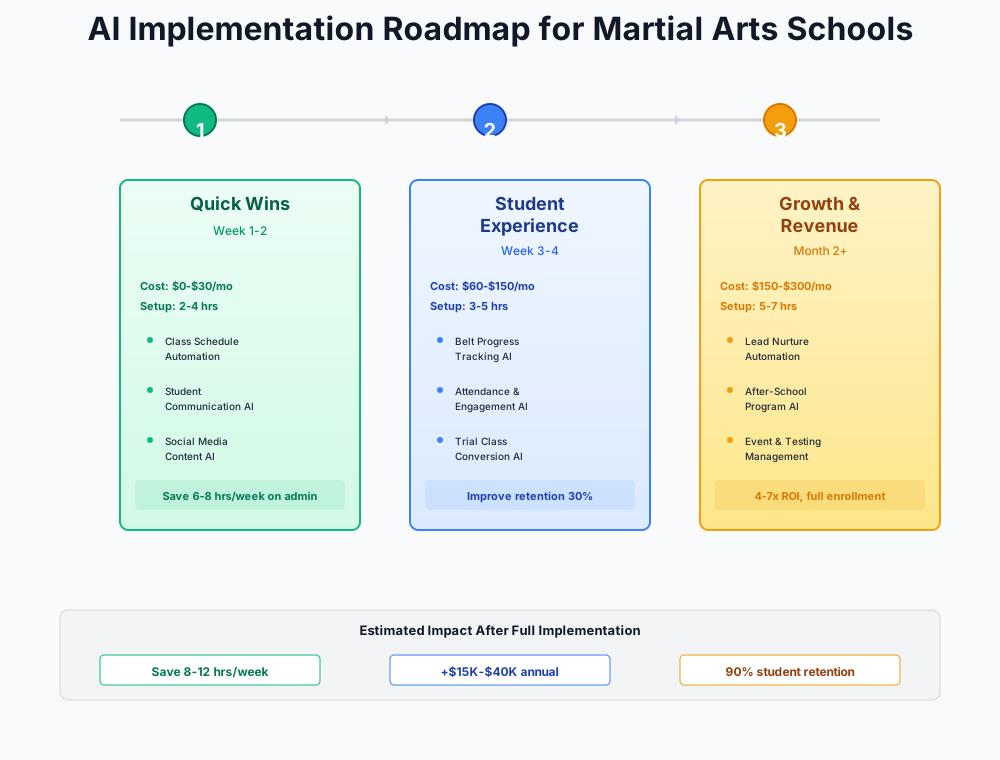
Here's a visual overview of the implementation approach:
Starting Point: Free AI Tools That Pay Off This Month
Setup time: 3–5 hours total | Monthly cost: $0–$60
Before spending anything, there are three places where free AI creates immediate, measurable impact: converting intro-trial leads before they go cold, handling the parent communication that eats your evenings, and maintaining a consistent social presence without blocking out two hours every Sunday.
The Trial Follow-Up Window Is Shorter Than You Think
Schools that respond to a trial inquiry within five minutes enroll 4–8x more students than schools that respond in hours. This isn't a soft statistic. It's the difference between a parent who's still sitting at their kitchen table with their phone in hand versus one who's already booked the ATA franchise down the road.
You can't respond in five minutes while you're teaching. But an automated SMS sequence can.
Open ChatGPT right now. Use the prompt below to write your entire follow-up sequence — it takes 20 minutes and you never touch it again.
Write a 3-message SMS follow-up sequence for a parent who submitted a "Free Trial Class" form on our martial arts school website. The school teaches children's karate ages 4–12.
Message 1: sent within 5 minutes. Confirm receipt, create urgency, and make booking easy. Message 2: sent 24 hours later if no reply. Add social proof and restate the offer. Message 3: sent 48 hours later as a final friendly follow-up.
Keep each message under 160 characters. Tone: friendly, local, not corporate.
Load the output into your management software (Kicksite, Zen Planner, or even free Textedly) as an automated trigger. Write once, runs forever. At a 50–70% trial-to-member conversion rate, two or three recovered leads per month adds $200–$875 in new recurring tuition from a free tool.
A Chatbot That Answers "What Age Can My Kid Start?" at 10 PM
Most parents research kids' activities on their phones after bedtime. Your website gets browsed at 10:30 PM on a Wednesday. There's nobody to answer the four questions every parent asks before booking a trial: What ages do you teach? What does it cost? Where are you located? How do I book?
Tidio (Lyro AI)
Best for: Schools with a WordPress, Squarespace, or Wix website
AI chatbot that answers your top FAQ questions 24/7, captures visitor contact info, and hands off to you when a conversation needs a human. Free plan covers 50 chatbot conversations/month — enough for most schools. Install in under 10 minutes with a simple website widget.
Configure five to eight FAQ responses: class schedule, pricing tiers, age requirements, trial class booking, location and parking, what to wear on day one, and the discipline(s) you teach. Set the chatbot to collect a name, email, and phone number before answering pricing questions — that's your lead. Converting two of those per month into enrolled students adds $200–$350 in recurring tuition.
One 30-Minute Sunday Session Covers Your Whole Social Week
Belt testing weeks and tournament prep will kill your posting schedule every single time. The answer isn't more discipline — it's batching. Sit down once a week, create everything, schedule it, and don't think about social media again until next Sunday.
Canva Magic Studio
Best for: Belt promotion announcements, event flyers, and social post graphics
25+ AI tools built into the design platform you probably already use. Magic Design generates branded templates from a text prompt. Magic Write drafts captions. Free plan works; Pro ($15/mo) unlocks full AI access.
Vista Social
Best for: Scheduling posts across Instagram, Facebook, TikTok, and more
AI-powered social media scheduler with caption generation, optimal posting time recommendations, and analytics. Free plan covers 3 social profiles and 15 scheduled posts per profile per month.
Canva creates the graphics; Vista Social schedules them. The prompt below handles belt promotion posts, which are your highest-engagement content and a direct signal to prospective parents that students are progressing.
Write a social media post (Instagram and Facebook) announcing that 12 students just earned their next belt rank at [School Name]. The students include kids and adults. The post should celebrate their hard work, mention the discipline required, and end with a soft call-to-action inviting followers to learn more about our programs. Add 5–8 relevant hashtags. Keep it genuine and community-focused, not salesy.
Going from two inconsistent posts per week to five or six scheduled ones typically lifts organic reach by 30–60% — and belt promotion posts specifically drive trial class inquiries from parents who see their neighbor's kid earning a new rank.
Stop Writing the Same Belt Testing Email Over and Over
"When will my child be ready to test?" is probably the question you answer most. Use ChatGPT to write your template once. Save it. Every future response takes 30 seconds instead of 10 minutes.
Write a friendly, clear email response to a parent asking "When will my child be ready to test for their next belt?" The child is a 7-year-old orange belt in our karate program. Explain that belt testing readiness depends on three factors: (1) minimum 40 class attendances since last promotion, (2) instructor evaluation of technique and attitude, and (3) demonstration of the curriculum requirements. Reassure the parent that we track this and will notify them when their child is eligible. Tone should be warm and confident. Keep it under 150 words.
Once you have the template, store it in your email client's saved responses or inside your management software. Personalize two fields — the belt level and the attendance count — and you're done. Building a small library of five or six templates covers 80% of parent communication.
ROI Snapshot
Monthly Cost
$0/mo
Time Saved
14hrs/week
Monthly Value
$4,240
ROI
Infinity%
Building the Engine: Automation That Runs Your School
Setup time: 6–10 hours total | Monthly cost: $100–$350
Free tools handle quick wins. This layer handles the workflows that steal the most hours every week: billing, attendance tracking, belt eligibility, and instructor scheduling. The goal is to get you from 15–20 admin hours per week to something closer to five or six — so you're running the school, not being run by it.
One Platform That Understands Belt Testing Isn't the Same as Gym Check-Ins
Generic gym software tracks membership. Martial-arts-specific platforms track whether your orange belt has attended 40 classes since their last promotion — then text the parent when it's time to test. That distinction matters more than any other feature comparison.
If you're on Google Calendar, spreadsheets, and manual invoices, you're probably spending 15–20 hours a week on admin that software handles automatically. One platform should replace three to five separate tools.
Kicksite
Best for: Small to mid-size dojos (25–150 students) wanting all features at every price tier
Purpose-built for martial arts with 20 years of industry focus. Automated billing retries, attendance-linked belt promotion tracking, unlimited free SMS, lead capture forms with automated follow-up. Pricing scales by student count — all features included at every tier. No upsells. Serves 2,000+ schools.
Spark Membership
Best for: Owner-operated dojos wanting AI messaging and built-in sales funnels
Built by martial arts school operators. AI messaging assistant suggests subject lines and optimal send times. Automated lead nurture sequences, billing retry logic, and belt promotion tracking with parent notifications. Website builder available as add-on.
Gymdesk
Best for: BJJ gyms and MMA studios newer to management software
Transparent all-inclusive pricing with no feature gating. Automated payment retry, attendance tracking with belt eligibility thresholds, built-in lead forms. 30-day free trial, no credit card required.
When you set up whichever platform you choose, do these four things in order: migrate your student roster and billing data (most platforms offer free migration support), configure belt and rank tracking with minimum attendance thresholds per level, set up automated failed payment reminders so the system sends three notices before you ever make an awkward phone call, and connect your website lead forms so inquiries flow directly into the CRM.
Don't Switch Platforms on a Whim
If you already have Zen Planner or Kicksite, schedule a 30-minute call with their support team before buying anything new. Ask them to walk you through setting up automated billing retries, attendance-linked belt alerts, and new student onboarding sequences. Most schools use less than 40% of what they're already paying for.
Getting this layer right saves five to eight hours a week and typically recovers $500–$1,500/month in failed payments that previously fell through the cracks.
Configuring Belt Progression Tracking the Right Way
Here's the specific setup sequence for Kicksite or Spark Membership, because "attendance-linked belt tracking" is only useful if it's configured correctly:
- Define your curriculum requirements per rank: minimum class attendances (e.g., 40 classes for yellow-to-orange), minimum time-in-grade (e.g., 3 months), and any specific skill checkpoints you use for evaluation
- Set automated notifications: when a student crosses their attendance threshold, the system emails the parent and flags the student for instructor review — eliminating the "is my kid ready?" conversation entirely
- Schedule testing events: create belt testing as a recurring event so students self-register once they're flagged eligible, rather than waiting for you to call them individually
- Log the history: every promotion is recorded automatically, giving you a complete rank progression record for each student
If you're running a BJJ school with stripe-based progression rather than formal belt tests, configure rolling attendance milestones instead — 50 classes, 100 classes, 200 classes — and trigger stripe promotions at each threshold. The principle is identical; only the nomenclature changes. The result is the same: no more tracking attendance on a spreadsheet or whiteboard.
Your Belt Ceremony Footage Is Your Best Marketing Asset
You've been filming these ceremonies for years. The footage sits in your camera roll. Meanwhile, other schools are posting clips of kids getting their belts — the exact content that makes parents watching from the sidelines pull out their phone and search for a trial class.
OpusClip
Best for: Turning class recordings and belt ceremonies into social media clips
Upload a 30-minute class recording and the AI generates 5–15 short clips automatically. Identifies the most engaging moments, adds captions (85% of social video is watched without sound), and reformats for every platform. Free plan: 60 processing minutes/month with watermark.
The workflow is straightforward: film one class or ceremony, upload to OpusClip, review the AI-selected clips and their virality scores, export in 9:16 for Reels and TikTok and 1:1 for Facebook, then schedule through Vista Social. One 30-minute recording produces five to ten social posts — a full week of content from 45 minutes of combined filming and review time.
Video drives two to five times higher engagement than static posts on these platforms. At $15/month for OpusClip, even one additional trial enrollment per month from organic reach covers the cost many times over.
Instructor Scheduling Without the Group Text Chain
Your 5:30 PM kids' class has 22 students registered. At 2:15 PM, one of your part-time instructors texts that he can't make it. You spend the next 45 minutes texting six people individually, waiting for responses, and figuring out who can cover.
Homebase
Best for: Schools with 2–8 part-time instructors needing schedule management and time tracking
AI-optimized scheduling, digital clock-in/out, mobile app for shift swaps, and automated overtime alerts. The free plan covers nearly every martial arts school. If you also need payroll, the add-on is $39/month + $6/employee.
Homebase's shift-swap feature eliminates the group text: when one instructor marks themselves unavailable, the system automatically notifies all qualified available instructors and waits for someone to claim the shift. You see the resolution in the app. No coordination required.
The tool is free for one location with up to 20 employees — more than enough for almost any independent school. If you're running a gym or fitness studio alongside your martial arts program, Homebase covers both under one account. Two to three hours a week recovered, at no cost.
ROI Snapshot
Monthly Cost
$200/mo
Time Saved
12hrs/week
Monthly Value
$3,420
ROI
1610%
Proactive Growth: Catch Quitters Early, Spend Ad Money Wisely
Setup time: 8–12 hours total | Monthly cost: $150–$500
With the operational foundation in place, the next layer focuses on two things that separate growing schools from stagnating ones: catching students before they drift away, and running paid advertising without burning money on campaigns that don't convert.
The Student Who "Just Got Busy" Is Already Gone in Their Head
Long before a parent sends the cancellation email, the warning signs are visible in the attendance data: two missed classes in a row, then three, then a skipped belt testing cycle. By the time they officially cancel, they decided to quit weeks earlier.
The intervention has to happen at week two, not week six. Set up these triggers inside Kicksite, Spark Membership, or whichever platform you're using:
- 14-day no-show: automated check-in email from the head instructor, sounding personal, not corporate
- 21-day no-show: automated SMS with an invitation to a specific upcoming class by name
- 30-day no-show: flagged for a personal phone call from the owner — this is the human intervention point that actually saves memberships
For kids' programs, start the first trigger at seven days. Parents disengage faster and a week without class is already a momentum killer for a seven-year-old who had other things fill the space.
Write a personal-sounding email from a martial arts instructor to a student named [NAME] who has not attended class in 3 weeks. The student is a 9-year-old yellow belt. The email should come across as a genuine check-in from their instructor, not a marketing email. Mention their progress toward the next belt, acknowledge that life gets busy, and invite them to return with a specific call-to-action to book a makeup class. Keep it under 150 words.
Schools with 100+ students should look at a more sophisticated option:
ABC Glofox
Best for: Schools with 100+ students wanting ML-powered churn prediction
AI At-Risk Report classifies every active member into low/medium/high churn risk using 16+ behavioral data points. Machine learning model trained on 41 million gym members globally. Identifies declining visit patterns that precede cancellation — patterns humans miss.
Retaining five to ten students per month who would otherwise have quit — at $100–$175 in monthly tuition each — is $1,000–$3,000 in saved recurring revenue. Compounded over years of their lifecycle, the impact is much larger. This is where the LTV math really shows itself.
Don't Spend $1,000/Month on Ads Until You Know Your Cost-Per-Enrollment
Spending on Facebook ads without knowing your cost-per-enrollment is common. Schools often have a vague sense that "ads are working" based on lead volume while paying $400 per new enrolled student — a number that's hard to justify against a $130/month membership.
Run this audit first. Export your last 90 days of Facebook ad data and paste the key metrics into ChatGPT:
Here are my martial arts school's Facebook ad metrics for the last 90 days:
- Total ad spend: $[X]
- Total leads generated: [X]
- Trial classes booked: [X]
- New enrollments from ads: [X]
- Click-through rate: [X]%
Calculate my cost per lead, cost per trial, and cost per enrolled student. Which metric is the weakest? What specific changes should I make to improve it? Be specific about whether I have a targeting problem, a creative problem, or a conversion problem.
Once you have those numbers, two paths forward depending on your situation:
Madgicx
Best for: Self-managed Facebook/Instagram ad optimization for schools with real ad budgets
AI audits your Meta ad account, identifies wasted spend, and automates budget allocation across ad sets. AI Bidding is an exclusive feature unavailable through manual campaign management. Cloud Tracking fixes iOS-impacted attribution.
Grow Pro Agency
Best for: Independent schools competing against franchise chains (ATA, Tiger Rock)
Martial-arts-specific marketing agency used by 600+ schools. Their DojoBot AI handles after-hours lead response (5 PM–9 AM). Human concierge team books 40,000+ trial appointments per year. Only evaluate if you have 80+ students and $750+/month ad budget.
Don't Sign Up Before You Track
Before hiring any agency or buying any ad tool, know your baseline: current cost-per-lead, trial-to-member conversion rate, and monthly churn rate. Without these numbers, you can't tell if the tool is actually improving results.
Add a Premium Tier: Home Practice Video Curriculum
Parents whose kids are halfway to their next belt are exactly the parents who want their child practicing at home between classes. Most schools don't offer this because building video curriculum feels like a production project. It isn't anymore.
HeyGen
Best for: Creating professional curriculum and program explainer videos without filming expertise
AI avatar video generator with dedicated martial arts training video templates. Text-to-video from a script. Voice cloning lets the AI narrate in your voice. Free plan: 3 videos/month. Creator plan ($29/mo): unlimited videos, 1080p, no watermark.
The setup: film yourself demonstrating the 10 most-taught beginner techniques on a smartphone with a tripod. Use HeyGen to add professional narration, captions, and formatting. Host the videos in a private YouTube playlist or behind a password-protected page. Then create a "Premium Membership" tier priced $20–$30/month above standard tuition — and market it to existing students as home practice support between classes.
If 20–50% of students upgrade, that's $500–$2,000/month in additional revenue from a $29/month tool. The content also strengthens retention: students practicing at home between classes progress faster, which means belt promotions come sooner, which keeps them engaged and enrolled.
Use Real Footage for Techniques
Use HeyGen for narration, captions, and program explainer videos — but always use real footage of you demonstrating techniques. Students need to see a real instructor performing the movement. AI avatars are great for talking-head content, not for showing a proper roundhouse kick.
Four Mistakes Worth Naming Specifically
Automating the enrollment conversation is the most expensive mistake you can make. AI should get leads to the trial class faster. It should handle the FAQ responses, the booking confirmation, the follow-up sequence. But the moment a parent is sitting across from you after their child's first class, deciding whether to enroll — that conversation must be human. They're deciding who's going to shape their kid's confidence and discipline for the next several years. A chatbot trying to close that sale loses the student.
Don't use AI-generated images of martial artists. AI image generators reliably produce photos with incorrect stances, wrong hand placements, and implausible belt configurations. Your students and parents know what real martial arts looks like. Use AI for graphics and design formatting; always use actual photos from your school for technique content.
GoHighLevel, Podium, and Birdeye work — for the right businesses. They're not designed for dojos. You'd spend weeks configuring a general-purpose CRM to do what Kicksite does out of the box on day one. Start with martial-arts-specific software; only evaluate general platforms if you have a specific need those tools can't cover.
Don't sign an agency contract before knowing your baseline numbers. Grow Pro Agency and others like them produce results — but only if you can tell whether results are actually improving. Know your cost-per-lead, trial conversion rate, and monthly churn rate before writing a check to any agency. Without those baselines, you're paying for a story, not a result.
Week-by-Week: What to Actually Do First
- Week 1: Open ChatGPT or Claude and write your 3-message SMS lead follow-up sequence. Load it into your management software as an automated sequence.
- Week 1: Install Tidio's free chatbot on your website. Set up FAQ responses for your top 5 questions (class times, pricing, ages, trial booking, what to wear).
- Week 1: Create a Canva account (free) and a Vista Social account (free). Batch-create and schedule 5 social posts for the coming week.
- Week 2: Use ChatGPT to create email templates for your 3 most-asked parent questions (belt testing eligibility, missed class makeup, payment issues).
- Week 2: Audit your current management software — are you using the automated billing retry, attendance tracking, and belt eligibility features you're already paying for?
- Month 1: If on spreadsheets, sign up for Kicksite or Gymdesk free trial. Migrate student roster and billing data.
- Month 2: Configure belt/rank tracking with attendance thresholds and automated parent notifications.
- Month 2: Set up Homebase (free) for instructor scheduling and shift management.
- Month 2: Start recording one class or belt ceremony per week. Run footage through OpusClip for social clips.
- Month 3: Create at-risk student automation triggers (14-day, 21-day, 30-day no-show sequences).
- Month 4+: Evaluate Madgicx or Grow Pro Agency if you're spending $1,000+/month on ads.
- Month 4+: Film 10 beginner curriculum videos and launch a Premium Membership tier with video access.
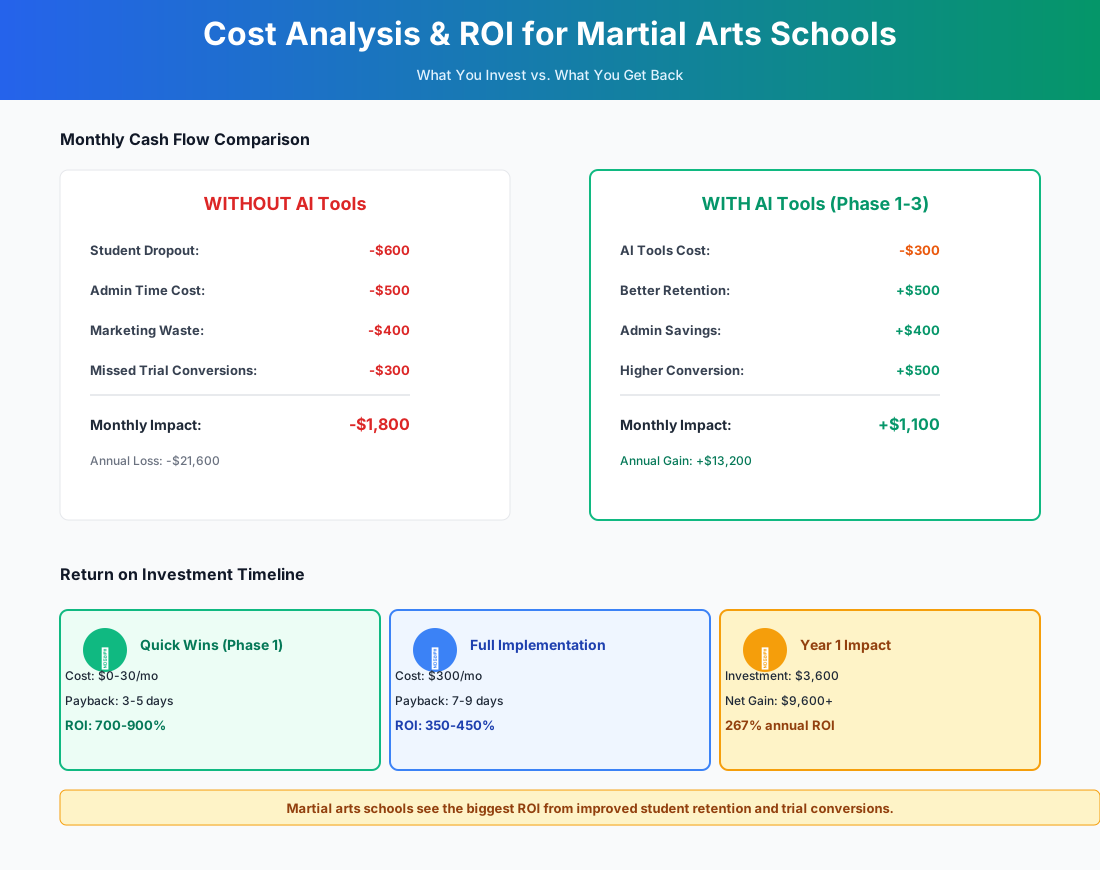
Here's a breakdown of the costs and expected returns:
FAQ
Can AI handle belt testing eligibility tracking across multiple martial arts styles at the same school?
Yes. Platforms like Kicksite and Spark Membership let you configure separate curriculum tracks with different attendance thresholds per style. Teaching karate and BJJ? Set up two independent rank progression systems — one with formal belt tests, one with stripe/belt progression based on rolling attendance milestones. Each student is assigned to their track, and the automation triggers independently. Schools teaching three or more styles should budget extra time for the initial configuration, but once it's set, it runs without you touching it.
My school has 50 students and I do everything myself. Is the paid software worth it?
At 50 students, solo-operated, is exactly when automation pays off most — you're doing 15-person work with one person. But before buying anything, call Kicksite or Zen Planner's support line and ask them to walk you through turning on automated billing retries and belt eligibility alerts. Most schools are already paying for features they've never activated. If you're genuinely on spreadsheets, Kicksite at $49/month gets you off them. The software pays for itself inside 90 days at this size.
What happens when a parent opts out of SMS?
Kicksite and similar platforms have TCPA-compliant opt-out handling built in. When a parent replies "STOP," they're removed from all automated sequences and the opt-out is logged. Changed numbers require a manual update. Before going live: make sure your enrollment agreement includes SMS consent language, and confirm your software's opt-out template complies with your state's rules. A 10-minute conversation with their support team covers both.
How do I track attendance toward belt requirements for a student attending multiple class times per week?
Your management platform counts total class attendances regardless of which time slot the student attends. A student at Monday kids' karate and Wednesday all-levels both count toward the same 40-class threshold. The only requirement: every class needs a digital check-in method — kiosk, QR code, or app-based instructor check-in. Whiteboard sign-in sheets don't feed into the system. Paper attendance breaks the automation.
Do AI-generated social media captions actually sound like a martial arts school?
Out of the box, about 70% there. Generic AI defaults to corporate fitness language ("unlock your potential!") instead of style-specific terminology. The fix: load your discipline, terminology, and school personality into every prompt. Ask for "an Instagram caption for a taekwondo school celebrating students earning their next belt, using terms like poomsae and dobok." Specificity is what separates authentic-sounding output from generic copy. After a few rounds you'll have a library of prompts that nail your voice every time.
Will switching platforms wipe out my attendance history and rank records?
No, and this is worth knowing before inertia keeps you on a system that isn't serving you. Kicksite, Spark Membership, and Gymdesk all offer free migration assistance covering your student roster, billing info, attendance records, and rank history. The migration typically takes three to seven business days. One real risk: stored credit card and ACH data often can't transfer directly due to PCI compliance, so you'll likely need to collect updated payment info from students. Plan for a two to three week overlap period running both systems to catch gaps.
Is AI going to replace my front desk staff?
No. And if a vendor tells you their chatbot can handle enrollment conversations without a human, they're selling you something that will cost you students. AI handles the 10 PM FAQ inquiry, the billing reminder, the Instagram caption, the belt testing notification. It doesn't build the relationship that keeps a family enrolled for six years. That's still you.
The math on martial arts schools is unusually favorable for retention-focused automation. A student who stays through black belt is worth $10,000–$13,000. Most of the tools that help you keep them — at-risk detection, belt tracking, parent communication — cost less than $200/month combined. The investment case writes itself.
Start with the trial follow-up sequence. The impact is immediate, it costs nothing, and it directly protects the top of your student lifecycle. Everything else in this guide compounds from there.
Running a school with a hybrid class-based model? Our yoga studio guide covers recurring membership retention from a different angle — worth reading if you teach adult classes alongside kids' programs.
More AI Implementation Guides
AI Closer & Automation for Gyms & Fitness Studios
AI closer software, automation & churn tools for gyms and fitness studios. Follow up leads in seconds, cut member churn, save 20+ hrs/week — setup steps inside.
AI Tools for Yoga Studios: 2026 Implementation Guide
The best AI tools for yoga studios in 2026. Automate follow-ups, cut admin hours in half, recover failed payments, and convert more trial students into members.
AI Tools for Breweries: The 2026 Owner's Playbook
The best AI tools for breweries in 2026: cut TTB compliance time, tighten COGS, streamline taproom scheduling, and target release marketing — starting free.
AI Tools for Bookkeeping Services: 2026 Guide
Best AI tools for bookkeeping services in 2026: Automate categorization, reconciliation, and document chasing without hiring extra staff.
AI Tools for Marketing Agencies: 2026 Playbook
The best AI tools for marketing agencies in 2026. A phased plan to kill Hell Week reporting, scale content, and fix billable utilization without new hires.
AI Tools for Home Health Care Agencies: 2026 Guide
A practical 2026 guide to AI tools for home health care agencies — HIPAA-safe automation for shift-filling, OASIS-E documentation, EVV, and claim denials.
Keep exploring
Browse the full library by industry or category, see every product we cover in the AI tools directory, or read the head-to-head comparisons.